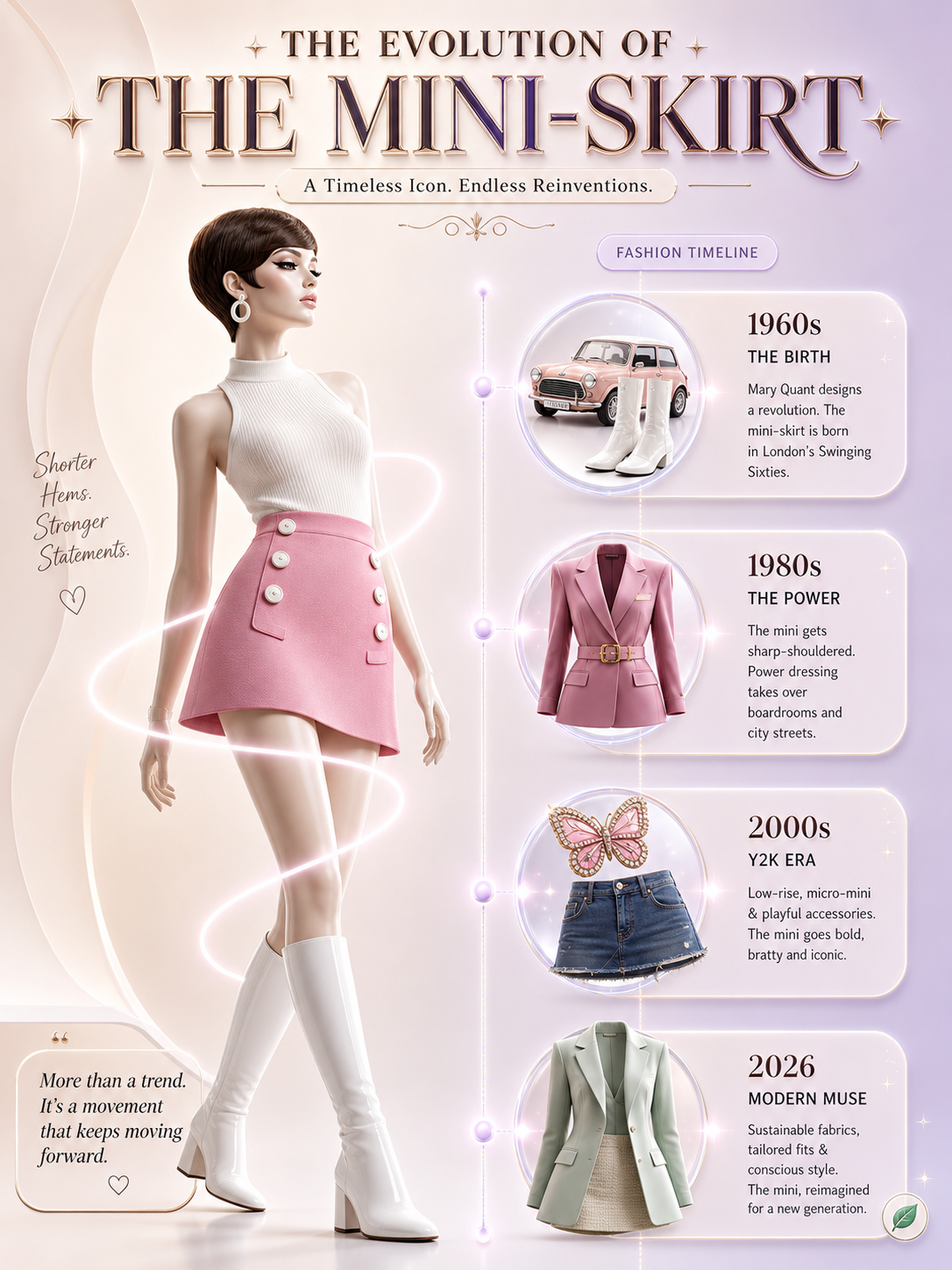
The mini-skirt rose to prominence in the mid-1960s, primarily credited to London designer Mary Quant. Inspired by the “youth quake” movement, it symbolized female liberation and a break from traditional social norms. Its evolution reflects shifting cultural attitudes toward gender equality, body positivity, and individual expression throughout the 20th and 21st centuries.
🚀 The Hemline Revolution: Why a Few Inches of Fabric Changed the World
Imagine a world where your worth was measured by the length of your skirt. 📏 For decades, women’s fashion was dictated by rigid social standards that prioritized modesty over movement. Then came the 1960s. Suddenly, a garment appeared that was more than just clothing; it was a protest. ✊
The mini-skirt didn’t just walk onto the scene; it exploded. At Trendy Muse, we believe that every iconic piece of clothing has a story that goes deeper than the threads. The mini-skirt is the ultimate symbol of rebellion, liberation, and the “youth quake” that redefined modern womanhood. Let’s dive into the history of the hemline that shook the world. 🌍
🇬🇧 The Birth of the Mini: London, Mary Quant, and the 1960s
While high-fashion designers often claim ownership of trends, the mini-skirt was born on the streets of London. 🏙️
1. Mary Quant: The Mother of the Mini ✂️
Mary Quant, a visionary designer based in Chelsea, is widely credited with bringing the mini-skirt to the masses. She named it after her favorite car, the Mini Cooper, because it shared the same qualities: it was sleek, functional, and fun.
- The Goal: Quant wanted to create clothes that allowed women to run for the bus and dance without restriction.
- The Vibe: It was about “youth” and breaking away from the “grown-up” styles of their parents’ generation.
2. André Courrèges and Space Age Chic 🚀
Across the English Channel, French designer André Courrèges was pushing boundaries with a more architectural approach. His “Space Age” collection featured short skirts paired with go-go boots, proving that the mini-skirt was a global phenomenon.
🏛️ More Than Fabric: The Mini-Skirt as a Political Statement
In the 1960s, wearing a mini-skirt was a radical act. It was a visual representation of the feminist movement and the fight for bodily autonomy. 🗳️
1. A Break from the “New Look”
Before the mini, the dominant silhouette was Dior’s “New Look”—extravagant, long, and restrictive. The mini-skirt rejected this hyper-feminine, domestic ideal in favor of something modern and athletic.
- Freedom of Movement: It allowed women to be active participants in the world, not just ornaments.
- Economic Independence: The rise of the mini coincided with more women entering the workforce and earning their own income.
2. The Cultural Backlash 🛑
Not everyone was a fan. Traditionalists saw the mini-skirt as a sign of moral decay. Some schools and offices banned the garment, which only made it more popular among the youth who wanted to challenge the status quo.
🕺 From Disco to Y2K: The Mini’s Enduring Legacy
The mini-skirt didn’t disappear after the 60s; it simply evolved to fit the changing decades. 🕒
1. The 1970s and 80s: Punk and Power 🎸
In the 70s, punk fashion took the mini and made it edgy with safety pins and leather. By the 80s, the “power skirt” appeared in the workplace—short, sharp, and paired with massive shoulder pads.
2. The 1990s and Y2K Revival 🦋
The 90s saw the mini-skirt become a staple of pop culture, from Clueless to the Spice Girls. Today, we are seeing a massive resurgence of the “micro-mini,” heavily influenced by the Y2K aesthetic that the Trendy Muse community loves so much.
🛠️ How to Style the Mini-Skirt for 2026
Fashion is cyclical, and the mini is back in a big way. Here is how to keep it modern:
- The Wrong Shoe Theory: Pair a structured mini-skirt with unexpected footwear, like chunky loafers or techy sneakers, for a balanced look.
- Layering: Use oversized blazers or trench coats to play with proportions and add a professional edge to a shorter hemline.
- Sustainability: Look for vintage minis. The best way to celebrate fashion history is to wear a piece that actually lived through it! ♻️
🏁The Mini-Skirt
The history of the mini-skirt teaches us that fashion is never “just” clothes. It is a reflection of who we are and who we want to be. 🌟 The mini-skirt survived decades of criticism to become a permanent fixture in our wardrobes because it represents the most important trend of all: Freedom.
The Moral: Your style is your voice. Use it to speak loudly, move freely, and challenge the boundaries of what is expected. 👗✨
👋 Join the Trendy Muse Community
Are you a fan of the classic mod look, or are you embracing the Y2K micro-mini revival? We want to see how you’re making history today!
Your Action Plan:
- Shop Your Closet: Find that mini-skirt you haven’t worn in a while and try a new styling technique.
- Tag Your Fit: Use #TrendyMuseHistory to show us your iconic mini-skirt looks. 📸
- Stay Inspired: Subscribe to our newsletter for more deep dives into the trends that define us.
What is your favorite era of the mini-skirt? Tell us in the comments below! 👇