
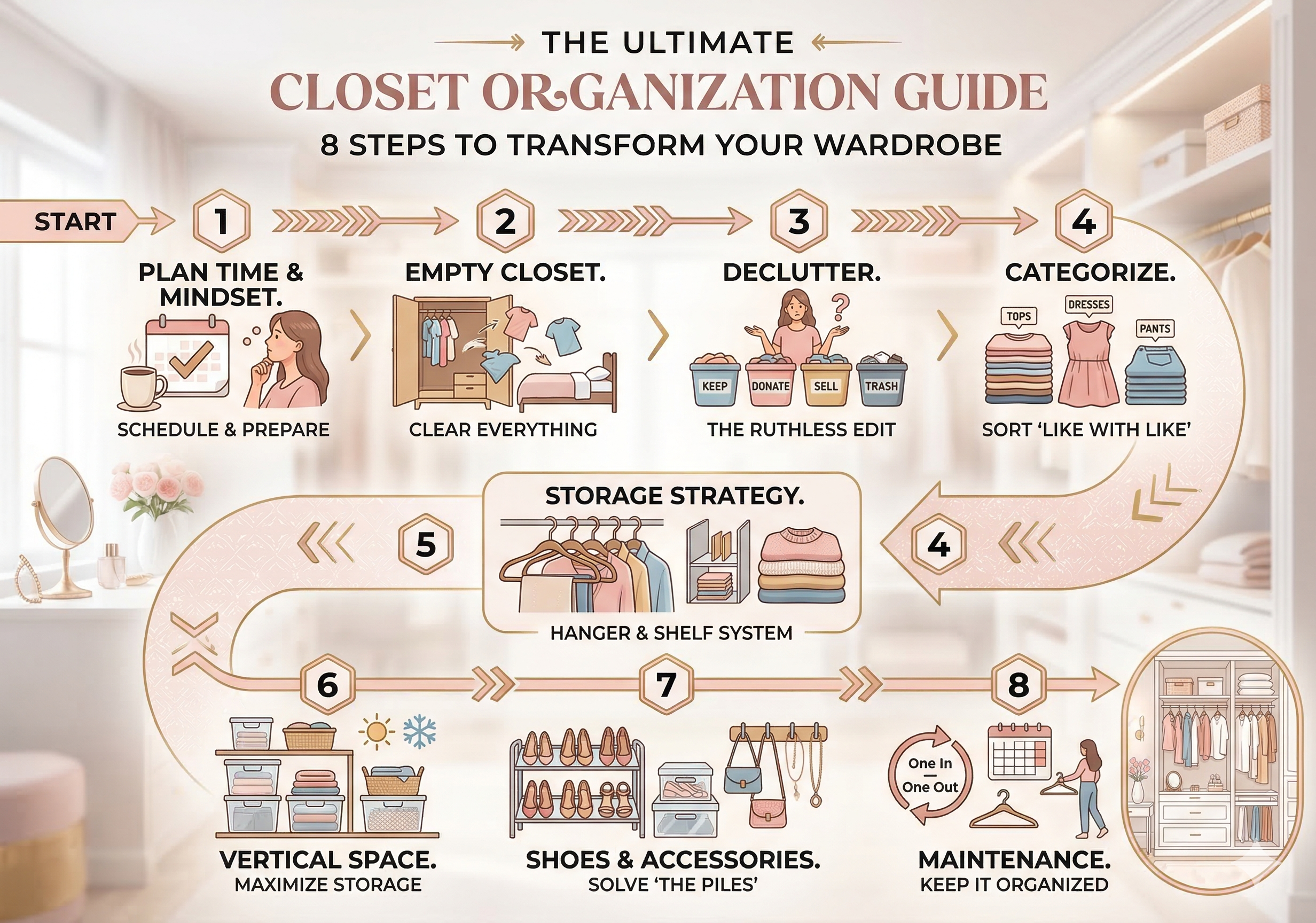
For many women, the closet is more than just a storage space; it’s a daily starting point. It’s where we shape our confidence for the day ahead. Yet, too often, this crucial space becomes a source of stress. A chaotic closet, overflowing with clothes that no longer fit, styles that are outdated, or items simply thrown into piles, translates into wasted time and decisions fatigue every single morning.
The good news? A beautifully organized closet isn’t a luxury reserved only for those with custom-built walk-ins. Regardless of the size of your space, you can transform it into a functional, inspiring sanctuary.
Ready to reclaim your space and revolutionize your morning routine? Follow this comprehensive, step-by-step guide to organizing your closet.
Step 1: Schedule the Time and Prepare Your Mindset
Don’t treat this as a quick 20-minute task. Organizing a closet properly is an event. Block out a significant chunk of time a full Saturday morning or a quiet Sunday afternoon where you won’t be interrupted.
Preparation is key: Gather four large bins, bags, or boxes. Label them clearly: KEEP, DONATE, SELL, and RECYCLE/TRASH. This simple organizational system is the foundation of a successful decluttering session. It prevents decision-making paralysis later on.
Step 2: The Mandatory Initial Step: Empty Everything (Yes, Everything!)
To properly organize your closet, you must first see its true potential. This means you must empty the entire contents. Remove every hanger, shoes, accessory, shoe box, and forgotten item.
Place everything on your bed or a clean floor space. This initial state of “clean slate” might feel overwhelming, but it is essential. Seeing the empty closet space helps you visualize how you want the space to function, free from the constraints of the old mess.
While the closet is empty, use this time to quickly wipe down shelves, vacuum the floor, and clean any mirrors. A fresh canvas is always more motivating.
Step 3: The Ruthless Edit: The Art of Decluttering
This is the most critical and, often, the most difficult step. Take a deep breath. It’s time to face the pile on your bed and make choices. Evaluate every single item individually.
Ask yourself these four tough questions as you pick up each piece:
- Does this fit me right now? (Not “in five pounds.”)
- Have I worn this in the last 12 months?
- Is this item in good condition? (No permanent stains, tears, or piling.)
- Do I feel good when I wear this?
Decision Guidelines:
- Keep: Items that pass all four tests and make you feel confident.
- Donate: Items that are in good condition but no longer fit your body, style, or life. They will bring joy to someone else.
- Sell: High-quality, brand-name, or vintage items in excellent condition that you are willing to photograph and list on resale platforms. (Note: If you don’t list them within 30 days, move them to ‘Donate.’)
- Trash: Damaged, stained, or heavily worn items. (Textiles can often be recycled; check your local options.)
If you genuinely can’t decide on an item, place it in a temporary “Maybe” pile. Return to it only after you’ve cleared the main pile.
Step 4: Group and Categorize Like with Like
Now that your pile only contains the “Keeps,” it’s time to sort them. Don’t start hanging them back in the closet yet! Categorize them on your bed or floor.
Suggested Categories:
- Dresses (Casual vs. Formal)
- Blouses and Tops
- Pants and Jeans
- Skirts
- Outerwear (Coats, Jackets, Blazers)
- Activewear
- Shoes (Boots, Heels, Flats, Sneakers)
- Accessories (Belts, Scarves, Jewelry, Handbags)
Step 5: Master Your Storage Strategy: Hangers, Shelves, and Zones
This is where you bring order back to the empty closet. You must assign a deliberate home for every category. The way you store your items impacts both their condition and your daily efficiency.
Hangers: The Rule of Uniformity
For a polished, stress-free look, uniformity is mandatory. Get rid of mismatched wire and plastic hangers. Invest in high-quality hangers:
- Slim-Line Velvet Hangers: Best for blouses, shirts, and dresses. They maximize space and prevent clothes from slipping.
- Wooden Hangers: Best for supporting heavy blazers and coats.
To Hang or To Fold?
- Hang: Anything prone to wrinkles (linen, silk, blousons), dresses, blazers, coats, and lightweight pants/skirts.
- Fold: Knits, sweaters (hanging stretches them), denim, activewear, and simple t-shirts. Utilize shelves or drawers for these items.
Organizing within the Zone
Once you’ve decided what goes where, organize within that category. For hanging clothes, many women find it most helpful to arrange by color (light to dark) or by sub-category (sleeveless tops, short sleeves, long sleeves).
Step 6: Maximize Vertical Space and Utilize Containers
Don’t let the vertical space above or below your hanging clothes go to waste.
- Top Shelf: This is prime real estate for seasonal items (e.g., winter sweaters in summer) or things you don’t need daily (e.g., formal handbags).
- Shelf Dividers: These are game-changers. They prevent stacks of sweaters, jeans, or handbags from toppling over.
- Baskets and Bins: Use them on top shelves or the floor to herd loose items (like belts, hats, or clutches).
Step 7: Shoe and Accessory Solutions
Shoes
Shoes are notorious for creating chaos.
- Clear Shoe Boxes: Stackable and visible the gold standard.
- Over-the-Door Organizer: Great space-saver for smaller heels, flats, and sandals.
- Shoe Racks: Use under your hanging clothes to keep daily pairs accessible.
Accessories
- Belt Racks or Hooks: Mount these inside the closet door or on a small empty wall space.
- Scarf Hangers/Rings: Keep your collection visible and unwrinkled.
- Jewelry organizers: Hanging organizers with clear pockets or tiered trays on a shelf.
Step 8: Maintenance: Keeping it Organized
Congratulations! You have a beautifully organized closet. But the real goal is to keep it that way.
- The One-In, One-Out Rule: For every new item of clothing you bring home, one existing item must be donated or sold.
- The Weekly Reset: Spend 15 minutes every week (perhaps when putting away laundry) straightening up piles and re-hanging clothes properly.
- Annual Edit: Schedule a ruthless decluttering session once a year (or seasonally) to revisit Step 3.
Your Sanity is in the Storage
Transforming your closet from chaos to calm is more than a chore; it’s an investment in your mental well-being and your daily energy. It is an act of self-care. By dedicating the time to clear the clutter, utilize smart storage solutions, and implement a thoughtful system, you are setting yourself up for a calmer, faster, and more confident morning every single day.
Leave a Reply
You must be logged in to post a comment.