How can you avoid mistakes and find the best deals during a fashion shopping season?
To avoid fashion shopping mistakes, prioritize quality over quantity by creating a wishlist based on wardrobe gaps. Focus on “Cost-Per-Wear,” shop mid-season for the best variety, and utilize price-tracking tools. Avoid “panic buying” trends and always check return policies to ensure every purchase adds long-term value to your style.
The Sale Season Survival Guide: Why Most People Overspend and How to Be Different 👗
We’ve all been there: the flashing “70% OFF” sign, the adrenaline rush of a digital countdown, and the sudden urge to buy a neon green faux-fur coat you know you’ll never wear. Shopping seasons are designed to trigger our “fear of missing out,” but more often than not, they result in a closet full of regrets and a depleted bank account. 🛍️
The secret to winning at fashion shopping isn’t just about finding the lowest price; it’s about finding the highest value. True style isn’t bought in bulk; it is curated with intention. In this guide, we’ll explore how to navigate the chaos of sales, avoid common psychological traps, and walk away with pieces that make you feel like a million bucks without actually spending it. 🌟
Mastering the Pre-Shop: The Secret Work That Happens Before You Hit the Stores 📝
Most shopping mistakes happen because of a lack of preparation. Entering a sale without a plan is like going to the grocery store hungry you’ll end up with a cart full of things you don’t need.
The Internal Wardrobe Audit
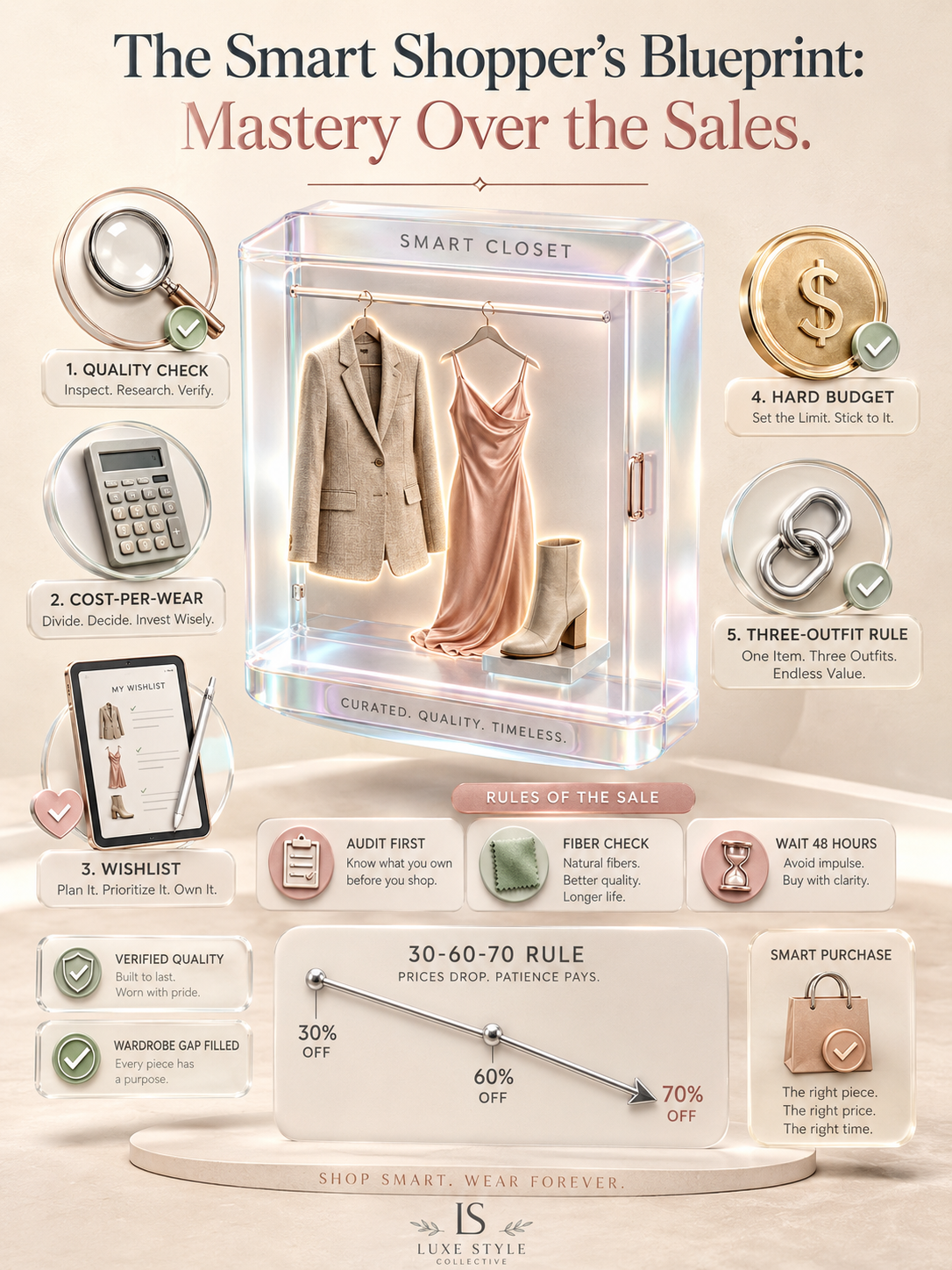
Before you look at a single website, look at your own closet. Identify what you actually wear and, more importantly, what is missing. Do you have five pairs of jeans but no professional blazer? Identify the “gaps” so your shopping has a specific mission.
Create a ‘High-Intent’ Wishlist
A wishlist acts as your strategic shield. If an item isn’t on your list before the sale starts, it probably shouldn’t be in your cart. This prevents “shiny object syndrome” where you buy something just because the discount looks impressive.
Set a Hard Budget (And Stick to It)
Decide on a total number before you start. Sales are only “saving” you money if you were already planning to spend that amount. If you spend $500 on “deals” you didn’t need, you haven’t saved $200; you’ve spent $500. 💸
The Quality Trap: How to Spot a Real Deal vs. a ‘Made-for-Outlet’ Fake 💎
Not all sales are created equal. One of the biggest mistakes shoppers make is assuming that a luxury brand name always equates to luxury quality during a clearance event.
- Check the Fabric Composition: Always look at the inner label. Natural fibers like wool, silk, and organic cotton hold their value and shape much longer than synthetic blends.
- Beware of ‘Exclusive’ Sale Lines: Many brands produce lower-quality items specifically for outlet stores or major sale events. If the material feels thin or the stitching is loose, leave it behind.
- The ‘Button and Zipper’ Test: High-quality garments use sturdy hardware. If a zipper sticks or a button feels like it’s about to pop off, the garment won’t survive a full season of wear.
Psychological Warfare: Avoiding the ‘Panic Buy’ and the ‘Discount High’ 🧠
Retailers are experts at psychological triggers. Understanding these can help you stay rational when the pressure is on.
The Scarcity Tactic
“Only 2 left in stock!” or “Sale ends in 10 minutes!” are phrases designed to bypass your logical brain. Take a breath. If you wouldn’t buy the item at full price, the “limited time” shouldn’t change your mind.
The ‘Cost-Per-Wear’ Calculation
This is the ultimate professional shopping metric. A $100 pair of boots you wear 100 times costs $1 per wear. A $20 “bargain” top you wear once costs $20 per wear. The $100 boots are the better deal. 👢
The Three-Outfit Rule
Never buy a piece of clothing unless you can immediately visualize at least three different outfits you can create with items you already own. If it requires you to buy three more things just to make it work, it’s not a deal—it’s an anchor.
Digital Shopping Hacks: Using Technology to Outsmart the Algorithms 💻
In the age of AI and Generative Engine Optimization, you can use technology to your advantage to ensure you are getting the absolute best price.
- Use Price Tracking Tools: Websites and extensions like Honey or CamelCamelCamel can show you the price history of an item. Is it actually at its lowest, or was it cheaper last month?
- Abandon Your Cart: Often, if you are logged in and leave items in your cart for 24–48 hours, brands will email you an extra discount code to “nudge” you to finish the purchase.
- Incognito Browsing: Some sites use cookies to track your interest and may keep prices high if they know you are desperate for a specific item. Shop in incognito mode to see the “true” base price.
- Newsletter Sign-ups: Create a separate email address just for fashion. Sign up for your favorite brands to get “early access” codes that the general public doesn’t see.
The Ethics of the Deal: Shopping for a Sustainable Future 🌿
Getting a great deal shouldn’t come at the cost of the planet or people. The “Fast Fashion” cycle relies on impulsive shopping seasons to move low-quality inventory.
Support Mindful Brands
Look for brands that offer “Archive Sales” rather than constant clearances. These are usually brands that produce smaller batches and are trying to clear space for new designs, rather than dumping mass-produced waste.
The Second-Hand Goldmine
Some of the best “fashion shopping season” deals aren’t at the mall. Platforms like Depop, Poshmark, or local vintage shops often see an influx of high-quality items right after a major sale season as people realize they made mistakes and want to declutter. ♻️
Strategic Timing: When to Strike for Maximum Savings ⏰
Timing is everything. If you shop too early, the discounts are small. If you shop too late, the sizes are gone.
- The 30-60-70 Rule: Most sales start at 30%, drop to 50% after two weeks, and hit 70% in the final “clearance” phase. Buy your “must-haves” at 30-50%. Save the “experimental” pieces for the 70% mark.
- Mid-Week Magic: Most online price drops happen on Tuesday or Wednesday. Shopping on the weekend often means fighting for stock that was depleted during the week.
- Off-Season Advantage: The best time to buy a winter coat is in July. The best time to buy a swimsuit is in January. If you can plan six months ahead, you will save the most money. ❄️☀️
Style Is a Marathon, Not a Sprint 🏆
At the end of the day, a successful fashion shopping season isn’t measured by how many bags you bring home. It’s measured by how much you love your wardrobe six months later.
True fashion value is found in the intersection of necessity, quality, and price. When you stop shopping for the “high” of a discount and start shopping for the longevity of your style, you’ll find that you actually spend less and look better.
Ready to transform your wardrobe? Take these tips, go through your closet, and make your “High-Intent” wishlist today. Your future, better-dressed self will thank you! 📈✨