
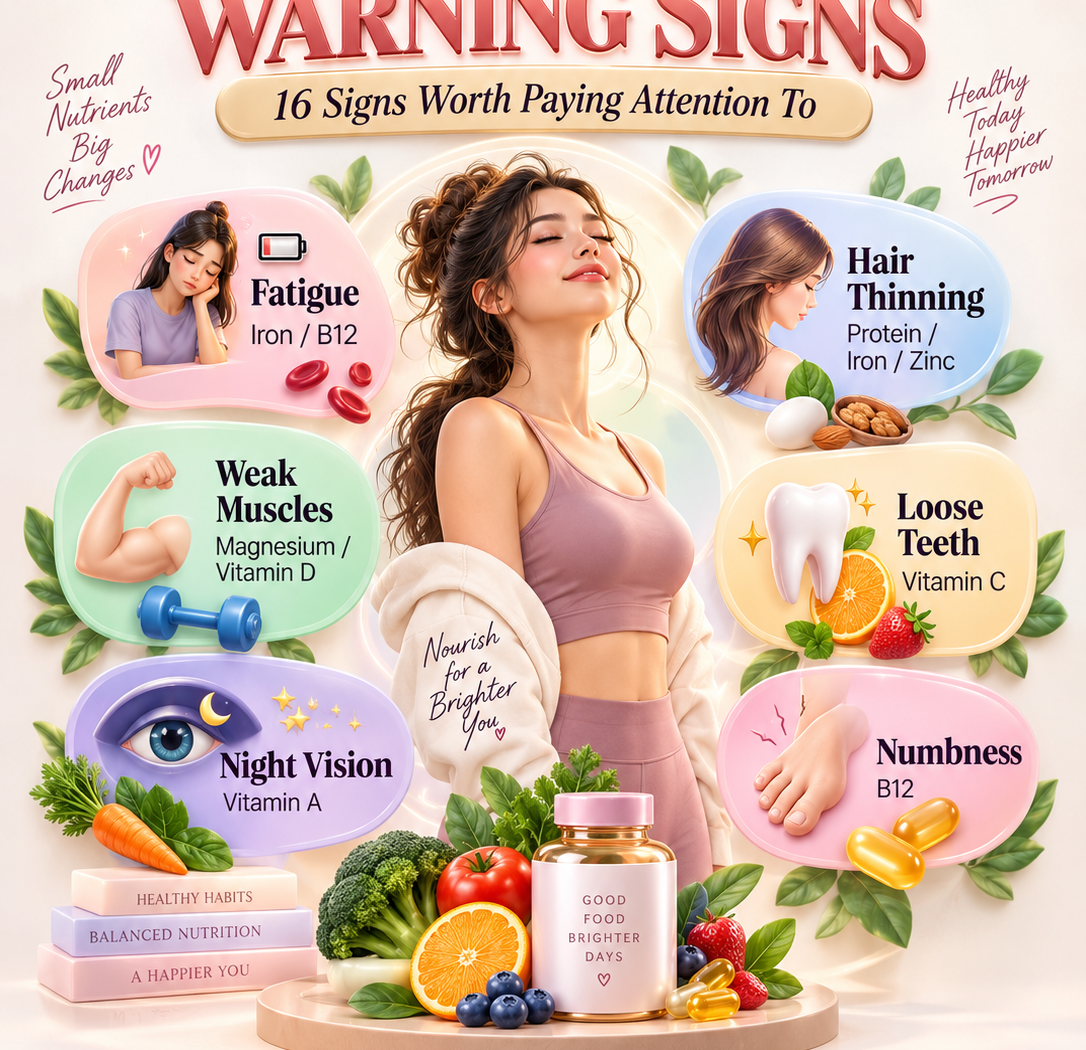
Many everyday symptoms can be linked to nutritional problems, but a symptom alone rarely identifies one specific deficiency. This guide explores the warning signs highlighted in the source infographic, including dry mouth, thinning hair, blurry or night vision, muscle weakness, loose teeth, numbness, peeling nails, fatigue, dizziness, ringing ears, joint pain, dry skin, brain fog, cracked heels, and low appetite. It explains which nutrients may be relevant, where the infographic oversimplifies the evidence, and why proper assessment matters. Vitamin A, B12, C, D, iron, magnesium, zinc, and adequate protein all support important body functions, while deficiencies can produce recognizable patterns. However, many symptoms have several possible causes, and some require medical evaluation rather than self-treatment with supplements. Learn how to interpret these signs, improve dietary variety, recognize red flags, and understand when testing or professional advice may be appropriate for safer, more informed everyday decisions.
🌿 What Can Nutritional Symptoms Really Tell You?
The body depends on vitamins, minerals, protein, healthy fats, carbohydrates, and adequate fluids to maintain normal functions. When the diet does not provide enough of a particular nutrient—or when the body cannot absorb or use it properly—deficiency can eventually develop.
Some nutritional deficiencies produce recognizable patterns. For example, vitamin B12 deficiency can cause fatigue and neurological symptoms such as numbness or tingling, while vitamin C deficiency can affect connective tissue and gums. Vitamin A deficiency can impair vision in low-light conditions, and vitamin D deficiency can contribute to bone pain and muscle weakness.
However, an important distinction is often missing from social-media nutrition lists: a symptom is not the same as a diagnosis.
🔎 Dry mouth, fatigue, hair thinning, dizziness, skin changes, or brain fog can have numerous causes unrelated to nutrition. The right approach is to view these signs as reasons to consider the bigger picture rather than immediately starting supplements.
🧠 16 Signs Worth Paying Attention To
💧 1. Dry Mouth
Dry mouth is included in the infographic alongside diabetes or vitamin B1. While diabetes can contribute to dry mouth, dry mouth itself is not a reliable indicator of a vitamin B1 deficiency.
Medications, dehydration, certain medical conditions, nerve problems, radiation treatment, and salivary-gland disorders can also cause persistent dryness.
🌱 If dry mouth continues, particularly when accompanied by difficulty swallowing, mouth sores, recurrent infections, or dental problems, professional assessment is more useful than assuming a nutritional deficiency.
💇 2. Thinning Hair
Adequate protein is essential because hair is largely made from a protein called keratin. Inadequate nutrition can contribute to hair loss, but thinning hair has many possible explanations.
🧬 Hereditary hair loss, thyroid problems, hormonal changes, illness, certain medications, restrictive diets, and deficiencies involving nutrients such as iron or zinc can all play a role. The American Academy of Dermatology notes that identifying the underlying cause is an important part of effective treatment.
👁️ 3. Blurry or Poor Vision
The infographic associates blurry vision with vitamin A. Vitamin A is indeed important for normal vision, and severe deficiency can cause night blindness and xerophthalmia.
⚠️ But sudden or persistent blurry vision should never automatically be treated as a vitamin deficiency. Eye conditions, blood-sugar changes, medication effects, refractive errors, and other medical problems can affect vision.
💪 4. Weak Muscles
Magnesium is involved in normal muscle and nerve function. Significant magnesium deficiency can cause weakness, fatigue, numbness, tingling, cramps, and abnormal heart rhythms.
🥬 Still, muscle weakness can result from many conditions, including inadequate calories or protein, electrolyte disturbances, illness, medication effects, or neurological problems.
🦷 5. Loose Teeth
Vitamin C has an important role in collagen production and connective-tissue health. Severe vitamin C deficiency can cause scurvy, which may include swollen or bleeding gums and loosening or loss of teeth.
🪥 Dental disease, periodontal problems, poor oral hygiene, and other conditions can also contribute to loose teeth. A loose adult tooth deserves dental evaluation rather than self-treatment with supplements.
🦶 6. Numb or Tingling Toes
Vitamin B12 deficiency can cause neurological changes, including numbness and tingling in the hands and feet. Importantly, these neurological symptoms can occur even without anemia.
🧩 Numbness, however, has a broad range of possible causes. Persistent, worsening, or unexplained numbness should be assessed rather than attributed to B12 deficiency without evidence.
💅 7. Peeling or Changing Nails
The infographic connects peeling nails with zinc. Zinc is essential for numerous biological processes, and zinc deficiency can affect hair, wound healing, taste, smell, and other functions.
✨ Nail changes are not specific to zinc deficiency. Repeated exposure to water or chemicals, trauma, infections, skin conditions, and other nutritional issues can also alter nails.
⚡ 8. Constant Fatigue
Fatigue is one of the most commonly mentioned signs of nutritional deficiency because several nutrients are involved in energy metabolism and blood formation.
Iron deficiency can contribute to anemia and fatigue, while vitamin B12 deficiency may also produce fatigue and weakness.
🩸 Persistent fatigue should not automatically lead to iron or vitamin supplementation. Sleep problems, stress, infections, thyroid conditions, anemia, medication effects, and other health issues may also be responsible.
🌀 9. Dizziness
The infographic links dizziness with iron. Iron deficiency can contribute to iron-deficiency anemia, which may cause tiredness and weakness.
🔬 Yet dizziness itself is not a specific marker of low iron. Dehydration, low blood pressure, inner-ear disorders, medications, blood-sugar changes, and other conditions can produce similar sensations.
👂 10. Buzzing or Ringing in the Ears
The source infographic associates buzzing in the ears with magnesium. However, tinnitus has many recognized causes, including hearing loss, loud-noise exposure, earwax, infections, certain medications, and several underlying medical conditions.
🎧 If ringing or buzzing is persistent, one-sided, pulsating, or associated with hearing changes or dizziness, medical or hearing evaluation may be appropriate.
🦴 11. Joint Pain
Vitamin D plays an important role in bone health. In adults, significant vitamin D deficiency can cause osteomalacia, which may produce bone pain and muscle weakness.
🏃 Joint pain, however, has numerous possible causes, including injuries, arthritis, inflammation, overuse, and other conditions. Vitamin D should not be assumed to be the explanation without appropriate assessment.
🧴 12. Red or Dry Skin
The infographic mentions an omega-6 imbalance. Essential fatty acids are important for normal skin function, but dry or irritated skin is not enough to establish an omega-6 deficiency.
🌸 Environmental dryness, skincare products, eczema, allergies, dehydration, medications, and dermatological conditions can all affect the skin.
🧠 13. Brain Fog
The image associates brain fog with vitamins B1 or B12. Vitamin B12 deficiency can cause neurological and cognitive changes, while severe deficiencies can affect the nervous system.
🧠 However, “brain fog” is a broad description rather than a specific medical diagnosis. Poor sleep, stress, illness, medications, hormonal changes, and other factors may affect concentration and memory.
🦶 14. Cracked Heels
The infographic associates cracked heels with omega-3 deficiency. Cracked heels are more commonly approached as a skin-barrier and mechanical issue rather than proof of an omega-3 deficiency.
🧴 Dry weather, prolonged standing, open-back footwear, thickened skin, dehydration, and dermatological conditions can contribute. Persistent cracks, bleeding, swelling, or signs of infection should be assessed.
🍽️ 15. Low Appetite
Zinc deficiency can cause loss of appetite in certain circumstances, and zinc is important for normal growth, immune function, wound healing, and sensory functions.
🥗 But appetite changes can also occur with infections, digestive problems, medications, stress, hormonal changes, and other health conditions.
🌙 16. Night-Vision Problems
This is one of the clearer nutritional connections in the infographic. Vitamin A is required for normal visual function, and night blindness is a classic manifestation of vitamin A deficiency.
👁️ Difficulty seeing in dim environments should still be evaluated professionally, especially if it develops suddenly or progresses.
🥦 Nutrients Commonly Connected With Deficiency Symptoms
Several nutrients repeatedly appear when discussing nutritional warning signs.
🟠 Vitamin A: Supports normal vision, immune function, and tissue health. Severe deficiency can cause night blindness and eye disease.
🔵 Vitamin B12: Supports red blood cell formation and neurological function. Deficiency can cause fatigue, anemia, numbness, tingling, balance problems, and cognitive changes.
🍊 Vitamin C: Supports collagen production, connective tissue, wound healing, and iron absorption. Severe deficiency causes scurvy.
☀️ Vitamin D: Supports calcium absorption and bone health. Deficiency can contribute to osteomalacia and muscle weakness in adults.
🩸 Iron: Essential for hemoglobin and oxygen transport. Inadequate iron can contribute to iron-deficiency anemia and fatigue.
🌿 Magnesium: Supports muscle and nerve function and many biochemical reactions. Significant deficiency can cause weakness, fatigue, cramps, and neurological symptoms.
🥜 Zinc: Supports immune function, wound healing, growth, and sensory functions. Deficiency can affect appetite, taste, smell, and hair.
🍳 Protein: Provides amino acids needed for tissue maintenance and repair. Inadequate protein intake can contribute to hair loss and other signs of poor nutrition.
🍎 How to Support Better Nutritional Health
A varied diet is generally a better starting point than trying to match every symptom with a supplement.
🥬 Include vegetables and leafy greens regularly for a broad range of vitamins, minerals, and plant compounds.
🍊 Add fruits and vegetables rich in vitamin C, such as citrus fruits, peppers, tomatoes, and other produce.
🥚 Include adequate protein from options such as eggs, fish, dairy products, legumes, poultry, tofu, or other suitable sources.
🌾 Choose varied whole grains, legumes, nuts, and seeds to increase the range of nutrients in the diet.
🐟 Include appropriate sources of essential fatty acids through foods such as fish, nuts, seeds, and plant oils.
💧 Maintain adequate fluid intake, especially when heat, exercise, illness, or other factors increase fluid needs.
🧪 When Should Nutritional Deficiency Be Investigated?
Symptoms become more meaningful when they appear as a pattern, persist over time, or occur alongside risk factors such as a restrictive diet, digestive problems, significant weight loss, certain medications, or conditions that affect nutrient absorption.
🩺 A healthcare professional can review symptoms, diet, medications, medical history, and—when appropriate—laboratory tests to determine whether a deficiency is actually present.
For example, the American Academy of Dermatology notes that blood testing may be used when a suspected nutritional deficiency could be contributing to hair loss.
⚠️ Taking high-dose supplements without confirming a deficiency can also be counterproductive. More is not automatically better, and excessive intake of certain nutrients can cause harm. The AAD specifically advises against taking iron or zinc supplements for hair loss unless testing indicates a deficiency.
🚨 Symptoms That Deserve Prompt Attention
Some symptoms should not be dismissed as a simple dietary issue.
👁️ Sudden vision changes or significant loss of vision require prompt medical attention.
🧠 New or rapidly worsening numbness, weakness, confusion, or neurological symptoms should be evaluated.
🦷 A loose adult tooth, significant gum bleeding, or severe oral symptoms warrant dental or medical care.
👂 Persistent or pulsating tinnitus, particularly when accompanied by hearing or balance changes, should be assessed.
💧 Persistent dry mouth with difficulty swallowing, recurrent mouth infections, or severe dental problems also deserves professional evaluation.
🌟 The Bottom Line
Nutritional deficiencies can produce genuine and sometimes distinctive symptoms, but online symptom charts can make the connection appear more straightforward than it really is.
🌱 Vitamin A, B12, C, D, iron, magnesium, zinc, and adequate protein are all important to normal health, yet symptoms such as fatigue, hair thinning, dizziness, dry skin, or brain fog rarely identify one nutrient by themselves.
🔬 The most useful approach is to combine a balanced diet with awareness of persistent symptoms and appropriate professional evaluation. Instead of asking, “Which supplement should I take?”, a better question is, “What could be causing this symptom, and how can that cause be confirmed?”
That distinction helps turn nutrition awareness into safer, evidence-informed health decisions.