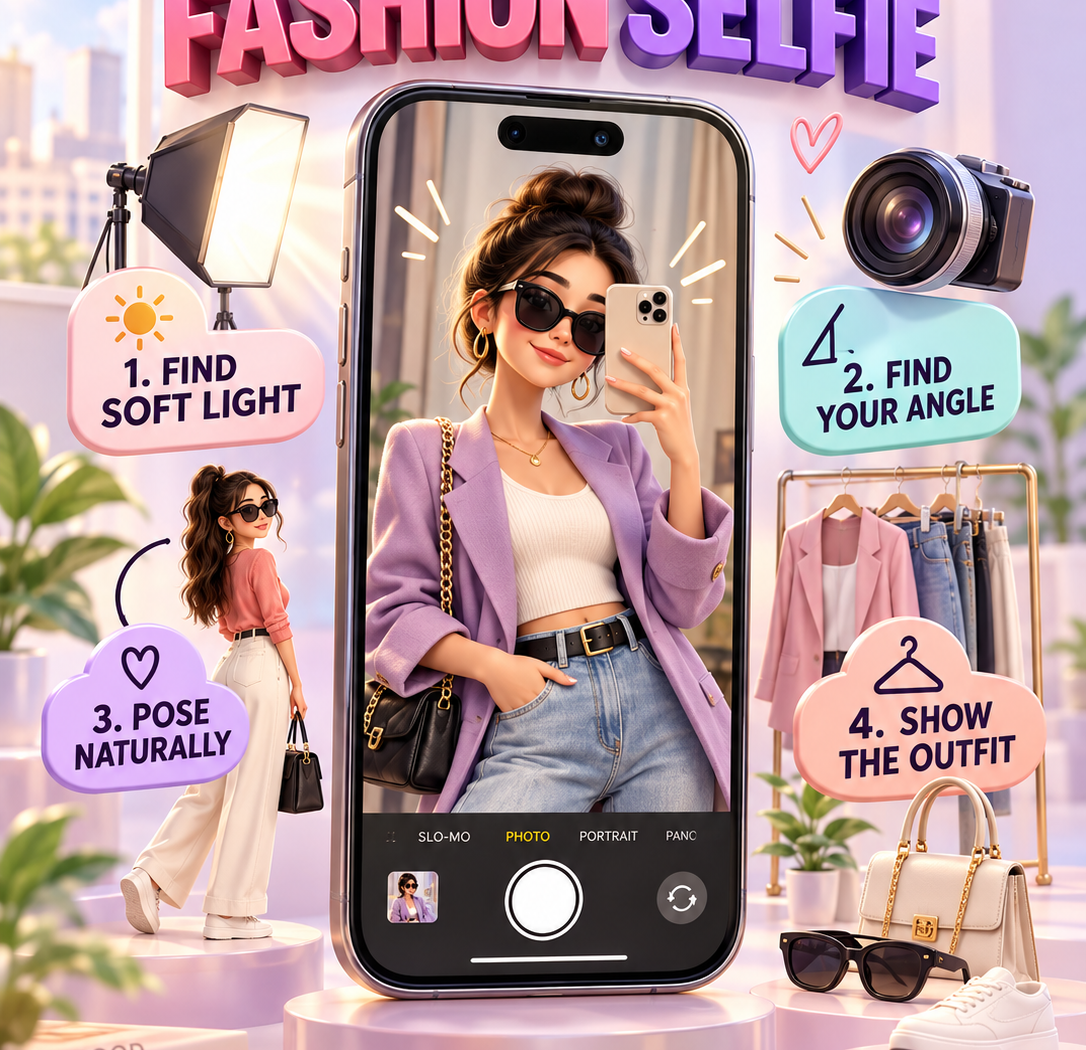
✨ A great fashion selfie is more than simply pointing a camera and smiling. Lighting, composition, posture, styling, and camera angles can dramatically influence how an outfit appears on screen. 📸 This guide explores practical selfie lighting techniques, flattering poses, camera positioning, backgrounds, and styling details that can help fashion bloggers create polished and visually consistent content. From using natural window light and golden-hour glow to understanding shadows, exposure, and flattering angles, each technique is designed to make fashion photography more intentional. 💡 The article also explains how to pose naturally without making images look overly staged, how to highlight clothing details, and how to create stronger compositions for social platforms. 👗 Whether shooting at home, outdoors, or in an urban setting, these straightforward methods can help transform everyday selfies into stylish fashion content that captures attention while maintaining a professional visual identity. 🌟
📸 The Art of the Selfie: Lighting and Posing Tips for Fashion Bloggers
A fashion selfie can look effortless on the screen, but creating an image that feels polished, flattering, and editorial often requires thoughtful technique. For fashion bloggers, the right combination of selfie lighting, posing, camera angles, outfit presentation, and composition can turn a simple photograph into compelling visual content.
The good news is that professional-looking fashion selfies do not always require expensive equipment or a dedicated studio. A smartphone, a suitable light source, an uncluttered setting, and a few reliable posing techniques can make a significant difference.
Whether the goal is to showcase a new outfit, create social media content, or build a recognizable fashion aesthetic, understanding the fundamentals of selfie photography provides a strong foundation.
💡 Why Lighting Matters in Fashion Selfies
Lighting is one of the most important factors in fashion photography because it affects skin tones, clothing colors, texture, shadows, and overall image quality.
Good lighting can make fabrics appear richer and details more visible. Poor lighting, on the other hand, can create harsh shadows, flatten an outfit, or make colors appear inaccurate.
☀️ Use Natural Light Whenever Possible
Natural daylight is one of the easiest ways to create flattering fashion selfies.
A large window can provide soft, diffused illumination, especially when the sunlight is not directly hitting the subject. Positioning yourself near a window allows light to fall naturally across the face and outfit.
For indoor selfies:
🌤️ Stand near a large window for soft illumination.
🪟 Face the window rather than standing with it directly behind you.
☁️ Use cloudy daylight for naturally diffused light.
🧺 Avoid strong direct sunlight when you want softer facial shadows.
Natural light is particularly useful for outfit photography because it can preserve the appearance of colors and fabric textures.
🌅 Take Advantage of Golden Hour
Outdoor fashion selfies can benefit from the warm, gentle quality of early morning or late-afternoon light.
Golden-hour lighting creates softer shadows and a warm atmosphere that can complement fashion photography. Instead of facing directly into intense sunlight, try positioning the light slightly to one side or behind you.
This can create subtle highlights around hair and clothing while keeping the overall image visually soft.
💡 Understand Light Direction
The direction of the light can completely change the appearance of a selfie.
Front lighting generally produces an evenly illuminated face, while side lighting can introduce dimension and emphasize clothing textures. Backlighting can create a stylish silhouette or glowing outline, although exposure needs to be adjusted carefully.
For fashion content, consider what the photograph needs to emphasize.
👗 Front light: Best for clearly showing outfit colors and facial details.
🌙 Side light: Useful for creating depth and dimension.
✨ Backlight: Effective for atmospheric and editorial-style images.
The strongest setup depends on the outfit, environment, and desired visual mood.
📱 Adjust Your Smartphone Camera
Modern smartphones can produce high-quality fashion photography, but small adjustments can significantly improve results.
Before taking photographs, clean the camera lens to remove fingerprints and dust. Use the rear camera when possible for higher image quality, especially when framing can be controlled with a timer or remote shutter.
Tap the screen to focus on the subject and check the exposure before capturing the image. If the clothing is particularly bright or dark, manually adjusting exposure can help preserve important details.
Avoid excessive digital zoom because it can reduce image quality. Instead, move the camera physically closer or farther away to create the desired composition.
📐 Choose a Flattering Camera Angle
Camera height and positioning influence proportions.
Holding a camera too close to the face can exaggerate certain features because of lens distortion. For full-body fashion photographs, placing the camera around waist to chest height can often produce a more balanced perspective.
For mirror selfies, keep the phone at a comfortable angle rather than pointing it sharply downward or upward.
👠 Show the Outfit Clearly
Fashion selfies should give the clothing enough visual space to become the focus.
If the goal is to showcase a complete outfit, avoid cropping important details such as shoes, trousers, skirts, sleeves, or accessories.
For close-up fashion content, move closer to emphasize:
👜 Bags and accessories
💍 Jewelry
🧵 Fabric texture
👓 Eyewear
👗 Necklines and tailoring
A combination of full-body and detail photographs can create a stronger visual story.
🧍 Master Natural Fashion Poses
One of the biggest challenges with selfies is avoiding a stiff appearance.
The most effective fashion poses often involve small, relaxed movements rather than dramatic positioning. Slightly shifting the weight onto one leg can create a more natural stance and introduce shape into the silhouette.
Instead of standing completely straight with both feet evenly positioned, experiment with subtle asymmetry.
✨ Try the Weight-Shift Pose
Place more weight on one leg while keeping the opposite leg relaxed. This creates a gentle curve and can make the pose appear less rigid.
Keep the shoulders relaxed and avoid forcing the posture.
👜 Use Accessories Naturally
Accessories can provide useful posing opportunities.
Holding a handbag, adjusting sunglasses, touching a jacket sleeve, or lightly interacting with jewelry can give the hands a purpose.
This is particularly useful when photographing alone because hand placement can otherwise feel unnatural.
🚶 Add Movement
Static poses are not the only option.
Walking slowly toward or away from the camera, adjusting a coat, turning slightly, or letting a skirt move naturally can create more dynamic photographs.
The objective is not to exaggerate movement but to introduce subtle action that makes the image feel spontaneous.
🪞 Make Mirror Selfies More Stylish
Mirror selfies remain popular for fashion content because they allow the entire outfit to be captured without requiring another photographer.
However, composition is especially important.
Keep the mirror clean, check the background, and remove distracting objects from the frame. Hold the phone in a position that does not completely cover the outfit.
For a more editorial appearance, experiment with slightly angled body positioning instead of standing completely parallel to the mirror.
🏙️ Choose a Background That Supports the Outfit
A strong fashion photograph does not always need an elaborate background.
Simple architectural walls, neutral interiors, sidewalks, staircases, cafés, gardens, and textured surfaces can provide visual interest without overpowering the clothing.
The background should complement the outfit rather than compete with it.
🎨 Think About Color Contrast
Color relationships can make an outfit stand out.
A neutral outfit can become more noticeable against a colorful environment, while a vibrant outfit may benefit from a quieter background.
Pay attention to competing colors, patterns, signs, furniture, and visual clutter before taking the photograph.
👗 Highlight Clothing Details
Fashion blogging is ultimately about communicating style, so the photograph should clearly show what makes the outfit interesting.
Consider details such as:
🧥 Layering
🧶 Knit textures
👖 Tailoring and fit
👢 Footwear
👜 Accessories
🕶️ Sunglasses
⌚ Watches and jewelry
Rather than relying exclusively on full-body selfies, create a mix of compositions. A close-up can highlight accessories, while a medium shot can showcase layering and a full-body image can communicate the complete look.
🎯 Use the Rule of Thirds
Composition can make a selfie feel more intentional.
The rule of thirds divides an image into nine sections using two horizontal and two vertical lines. Positioning the subject near one of these lines or intersections can create a balanced composition.
For fashion photographs, this technique can also leave useful negative space around the subject.
Negative space is especially valuable when images may later be used with text overlays or social media layouts.
🌿 Keep the Environment Clean
A stylish outfit can lose attention if the background contains too many distractions.
Before shooting, scan the frame for objects that unintentionally draw attention. Cluttered tables, random clothing, bright signs, messy rooms, and crowded backgrounds can compete with the subject.
A few seconds spent checking the frame can make the final photograph considerably cleaner.
📸 Create Consistency Across Fashion Content
A recognizable visual style can help fashion blogs and social media profiles appear more cohesive.
Consistency does not mean every photograph needs to look identical. Instead, establish recurring characteristics such as:
✨ Similar lighting conditions
🎨 A complementary color palette
📐 Consistent framing
🏙️ Recognizable locations or settings
👗 A repeatable approach to outfit presentation
Over time, these choices can create a stronger visual identity.
🚫 Common Selfie Mistakes to Avoid
Even small technical mistakes can reduce the impact of fashion photography.
❌ Harsh Overhead Lighting
Strong overhead light can create unwanted shadows beneath the eyes and nose. Whenever possible, use softer light from a more flattering direction.
❌ Distracting Backgrounds
A visually complicated background can pull attention away from the outfit.
❌ Extreme Camera Angles
Very high or very low angles can distort proportions and make clothing appear different from its natural shape.
❌ Overposing
A pose that feels excessively complicated can make the image appear forced. Start with simple movements and natural posture.
❌ Ignoring Exposure
Bright clothing, reflective accessories, or strong sunlight can cause parts of an image to lose detail. Check exposure before taking the final shot.
🧠 A Simple Fashion Selfie Formula
Creating a polished selfie can become easier when the process is consistent.
🔹 Find the light: Look for soft, even illumination.
🔸 Check the background: Remove unnecessary distractions.
🟣 Frame the shot: Decide whether the outfit or face is the primary focus.
🟢 Choose the pose: Shift your weight, relax your shoulders, and give your hands a purpose.
🟠 Check the outfit: Make sure clothing, accessories, and hair are positioned intentionally.
🔵 Take multiple frames: Small changes in expression, posture, and movement can produce very different results.
🌟 Turn Everyday Selfies Into Fashion Content
The art of the fashion selfie comes down to intentional choices rather than complicated equipment. Good lighting establishes the visual foundation, while thoughtful posing communicates confidence and showcases the outfit.
Camera height, composition, background selection, color relationships, and styling details then refine the final image.
For fashion bloggers, the strongest approach is to develop a repeatable photography routine. Identify reliable lighting conditions, understand which angles present clothing accurately, experiment with subtle poses, and keep compositions clean.
Most importantly, the photograph should serve the fashion. Whether the image focuses on a complete outfit, a statement accessory, a seasonal trend, or a particular styling technique, every visual element should support that message.
With the right combination of selfie lighting techniques, fashion poses, smartphone photography, composition, and styling, an ordinary self-portrait can become polished, engaging fashion content.