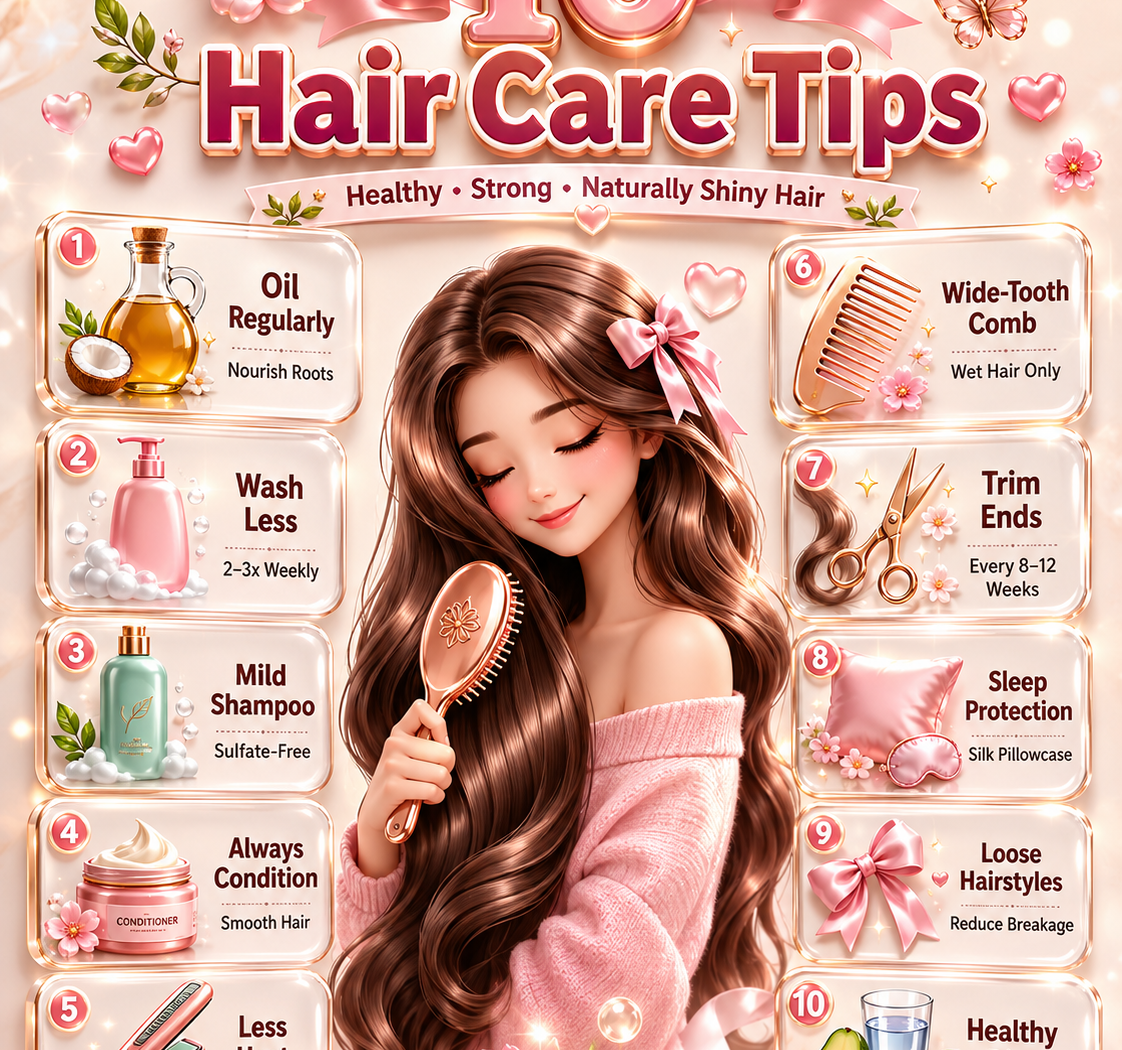
💖 Healthy, beautiful hair starts with the right daily habits—not expensive treatments. This guide explores 10 simple hair care tips that help improve hair strength, reduce breakage, support natural shine, and maintain a healthier scalp. 🌿 Learn why regular oiling, choosing a gentle sulfate-free shampoo, conditioning correctly, limiting heat styling, using a wide-tooth comb, trimming split ends, protecting hair while sleeping, avoiding tight hairstyles, and maintaining a nutrient-rich diet all contribute to long-term hair health. 💆♀️ Whether your hair is straight, curly, wavy, or textured, these practical routines are easy to follow and suitable for most hair types. Discover expert-backed care techniques that promote stronger, softer, and more manageable hair while preventing common damage caused by everyday habits. ✨ Build a consistent hair care routine that supports healthy growth and keeps your hair looking vibrant, smooth, and naturally beautiful every day.
What Are the Best Hair Care Tips for Strong and Healthy Hair?
Healthy hair is more than just a beauty goal—it reflects consistent care, good hygiene, and balanced nutrition. While countless products promise instant transformation, truly healthy hair develops through simple daily habits practiced over time.
Many common hair concerns such as dryness, split ends, excessive shedding, dullness, and breakage often result from overwashing, harsh styling, poor nutrition, or improper maintenance. Fortunately, small adjustments to your routine can significantly improve the health and appearance of your hair without requiring complicated treatments.
This guide covers ten practical hair care habits recommended for maintaining stronger, softer, and shinier hair. Whether you have straight, curly, wavy, fine, or thick hair, these easy-to-follow practices can help minimize damage, protect your strands, and support healthy hair growth naturally.
Let’s explore the daily habits that can make a lasting difference.
🧴 Understanding Healthy Hair
Healthy hair begins beneath the surface. Every strand grows from a hair follicle within the scalp, making scalp care just as important as caring for the visible hair.
Several factors influence hair health, including:
🌼 Genetics
🌿 Diet and hydration
💧 Hair care products
☀️ Environmental exposure
💨 Heat styling habits
😴 Sleep quality
🧘 Stress levels
Although genetics determine many aspects of hair texture and growth, everyday habits greatly affect how healthy, smooth, and resilient your hair becomes over time.
💖 1. Oil Your Hair Regularly
Hair oiling has been practiced across many cultures for generations because it helps nourish both the scalp and hair strands.
Regular oil massage may help:
✨ Improve scalp moisture
🌿 Reduce dryness
💆 Encourage healthy circulation
💖 Strengthen hair strands
🌸 Minimize frizz
Natural oils commonly used include:
🥥 Coconut oil
🌰 Argan oil
🌿 Jojoba oil
🌼 Almond oil
🌱 Rosemary-infused oil
For most people, applying oil one or two times each week before shampooing provides adequate nourishment without creating excessive buildup.
Why Hair Oiling Matters
Oil acts as a protective barrier that reduces moisture loss during washing while helping hair remain soft and manageable.
🚿 2. Don’t Overwash Your Hair
One of the biggest mistakes people make is washing their hair too frequently.
Although shampoo removes dirt and excess oil, excessive washing strips away the scalp’s natural protective oils.
This can lead to:
💧 Dry hair
❄️ Flaky scalp
⚡ Increased frizz
💔 Hair breakage
🌾 Dull appearance
Most hair types benefit from washing approximately two to three times each week, though oily scalps or active lifestyles may require slightly more frequent cleansing.
Signs You’re Washing Too Often
🌸 Hair feels rough after every wash
🌸 Scalp becomes itchy quickly
🌸 Ends remain dry despite conditioning
🌸 Hair loses natural shine
Finding the right washing schedule depends on your scalp condition rather than following a universal rule.
🫧 3. Choose a Gentle Sulfate-Free Shampoo
The shampoo you use has a significant impact on your hair’s overall condition.
Gentle sulfate-free shampoos cleanse effectively while reducing unnecessary moisture loss.
Benefits include:
🌼 Less scalp irritation
💧 Better moisture retention
✨ Improved softness
🌿 Reduced color fading for treated hair
💖 Better protection for curls and textured hair
Look for formulas containing ingredients such as:
🍃 Aloe vera
🌾 Oat protein
🌸 Chamomile
🥥 Coconut-derived cleansers
🌿 Glycerin
Avoid selecting products solely based on fragrance or packaging. Instead, choose shampoos designed for your specific hair type and scalp needs.
💆♀️ 4. Never Skip Conditioner
Conditioner restores moisture after shampooing and forms a protective layer around each strand.
Using conditioner consistently helps:
✨ Reduce tangles
💖 Increase softness
🌸 Improve smoothness
🌿 Protect against friction
💧 Reduce split ends
Apply conditioner mainly from the middle of the hair toward the ends, avoiding heavy application directly on the scalp unless using a scalp-specific conditioning product.
Deep Conditioning Tips
For dry or damaged hair, consider using a nourishing hair mask once each week to replenish lost moisture and improve elasticity.
🔥 5. Limit Heat Styling
Hair styling tools such as blow dryers, curling irons, and straighteners expose hair to high temperatures that gradually weaken the protective outer layer of each strand.
Frequent heat exposure may contribute to:
💔 Split ends
🌾 Dry texture
⚡ Frizz
🌸 Loss of shine
💨 Increased breakage
Whenever possible:
✨ Allow hair to air dry
🌿 Use lower heat settings
🛡️ Apply a heat protectant before styling
📅 Reserve high-heat styling for special occasions rather than everyday use.
🪮 6. Use a Wide-Tooth Comb on Wet Hair
Wet hair is at its weakest state, making it more susceptible to stretching, snapping, and breakage. Brushing soaked hair with a fine-tooth comb or stiff brush can damage the hair cuticle and lead to unnecessary hair fall.
A wide-tooth comb gently separates strands while reducing tension on the roots.
Benefits of Using a Wide-Tooth Comb
✨ Minimizes hair breakage
💧 Helps detangle gently
🌿 Preserves natural curl patterns
💖 Reduces pulling and scalp discomfort
🌸 Prevents unnecessary hair loss
Best Way to Detangle Wet Hair
🍃 Gently squeeze excess water using a microfiber towel or a soft cotton T-shirt.
🌼 Apply a leave-in conditioner or detangling spray if needed.
🪮 Begin combing from the ends and gradually work upward.
💆 Hold sections of hair near the roots to reduce pulling.
Avoid aggressively rubbing your hair dry with a towel, as this roughens the cuticle and increases frizz.
✂️ 7. Trim Your Hair Regularly
Many people avoid trimming because they believe it slows hair growth. In reality, regular trims do not affect how quickly hair grows from the scalp—they simply remove damaged ends before they split further.
Split ends travel upward along the hair shaft if left untreated, causing more noticeable damage over time.
Benefits of Regular Trimming
✨ Removes split ends
🌸 Improves overall appearance
💖 Reduces tangling
🌿 Makes hair easier to manage
💧 Helps maintain healthier-looking lengths
Most hair professionals recommend trimming every 8–12 weeks, although highly damaged or chemically treated hair may benefit from more frequent maintenance.
Healthy ends make the entire hairstyle appear fuller, smoother, and shinier.
😴 8. Protect Your Hair While Sleeping
Nighttime hair care is often overlooked, yet it plays an important role in maintaining smooth, healthy hair.
As you sleep, constant friction between your hair and pillowcase can contribute to tangles, frizz, and breakage.
Simple Overnight Hair Protection Tips
🛏️ Sleep on a silk or satin pillowcase.
🎀 Tie long hair into a loose braid or low ponytail.
💖 Avoid sleeping with soaking wet hair.
🌙 Apply a lightweight leave-in conditioner if your hair tends to become dry overnight.
Silk and satin fabrics create less friction than traditional cotton pillowcases, allowing hair to glide smoothly instead of snagging against the fabric.
Even small nighttime adjustments can significantly improve hair texture over time.
🎀 9. Avoid Tight Hairstyles
While sleek ponytails, buns, and braids may look stylish, wearing them too tightly every day places continuous stress on the hair follicles.
This repeated tension may increase breakage and, over time, contribute to traction-related hair loss.
Hairstyles That Reduce Stress on Hair
🌸 Loose braids
🌿 Low ponytails
💖 Soft buns
✨ Loose twists
🍃 Protective hairstyles that aren’t overly tight
Using fabric-covered hair ties instead of rubber bands also helps reduce friction and prevents strands from snapping during removal.
Changing hairstyles regularly distributes tension more evenly across the scalp.
🥗 10. Eat a Balanced Diet and Stay Hydrated
Beautiful hair isn’t created by products alone. Healthy hair begins with proper nutrition and hydration.
Hair follicles rely on vitamins, minerals, proteins, and healthy fats to produce strong, resilient strands.
A balanced diet supports healthier hair growth and overall scalp health.
Nutrients That Support Healthy Hair
🥚 Protein helps build hair structure.
🥬 Iron supports oxygen delivery to follicles.
🥜 Healthy fats improve moisture retention.
🥑 Vitamin E helps protect hair from oxidative stress.
🍊 Vitamin C supports collagen production.
🐟 Omega-3 fatty acids nourish the scalp.
🥛 Zinc contributes to healthy follicle function.
Staying adequately hydrated also helps maintain scalp moisture and supports normal hair function throughout the body.
While nutrition alone won’t solve every hair concern, it forms one of the strongest foundations for long-term hair health.
🌺 Build a Hair Care Routine That Works
Healthy hair doesn’t require dozens of expensive products or complicated routines. Instead, consistency is the key.
A simple weekly routine might include:
🌸 Washing your hair two to three times each week with a gentle shampoo.
🥥 Applying nourishing hair oil once or twice weekly.
💆 Conditioning after every shampoo.
🪮 Detangling carefully with a wide-tooth comb.
🔥 Limiting heat styling whenever possible.
😴 Protecting hair during sleep.
✂️ Scheduling regular trims every few months.
🥗 Maintaining a balanced diet and staying hydrated.
These habits work together to strengthen hair over time while helping reduce dryness, frizz, and breakage.
❌ Common Hair Care Mistakes to Avoid
Even with a good routine, certain habits can undo your progress.
⚠️ Washing your hair too frequently.
⚠️ Using extremely hot water.
⚠️ Brushing wet hair aggressively.
⚠️ Applying excessive heat every day.
⚠️ Skipping conditioner.
⚠️ Ignoring split ends.
⚠️ Wearing tight hairstyles continuously.
⚠️ Using products that aren’t suited to your hair type.
Being aware of these common mistakes can help you make smarter choices and keep your hair healthier in the long run.
🌿 Does Hair Type Change Your Routine?
Every hair type benefits from proper care, but routines should be adjusted according to individual needs.
Straight Hair
✨ Focus on lightweight conditioners and regular cleansing to prevent oil buildup.
Wavy Hair
🌊 Balance moisture with lightweight styling products to maintain definition.
Curly Hair
💖 Prioritize hydration, gentle detangling, and sulfate-free cleansing to reduce dryness and preserve curl patterns.
Coily Hair
🌿 Use richer moisturizers, protective styles, and deep conditioning treatments to maintain elasticity and reduce breakage.
Listening to your hair’s unique needs is more effective than following trends or copying someone else’s routine.
🌸 Final Thoughts
Healthy, strong, and naturally shiny hair is built through consistent daily habits rather than quick fixes. Small improvements—such as using a gentle shampoo, conditioning regularly, trimming split ends, limiting heat styling, and nourishing your body with a balanced diet—can have a lasting impact on your hair’s overall health.
Rather than chasing temporary results, focus on creating a sustainable routine that protects your hair every day. Caring for your scalp, choosing products that suit your hair type, and avoiding unnecessary damage all contribute to stronger strands and improved manageability over time.
Remember that every hair type is unique, and progress may take time. With patience, consistency, and mindful care, you can maintain healthier, softer, and more resilient hair that looks and feels its best throughout every season.
🌼 Key Takeaways
✨ Oil your hair regularly to nourish the scalp and strengthen strands.
💧 Avoid overwashing to preserve natural oils.
🫧 Choose a gentle sulfate-free shampoo suited to your hair type.
💆 Never skip conditioner after shampooing.
🔥 Reduce heat styling and always use heat protection.
🪮 Detangle wet hair gently with a wide-tooth comb.
✂️ Trim split ends every 8–12 weeks.
😴 Protect your hair while sleeping with a silk or satin pillowcase.
🎀 Avoid overly tight hairstyles that strain hair follicles.
🥗 Eat a balanced, nutrient-rich diet and stay hydrated to support healthy hair from within.
Healthy hair is the result of consistent care, gentle handling, and daily habits that protect both the scalp and every strand. With these ten practical tips, you can build a routine that promotes stronger, smoother, and naturally radiant hair over the long term.