Is It Better to Iron or Steam Your Clothes?
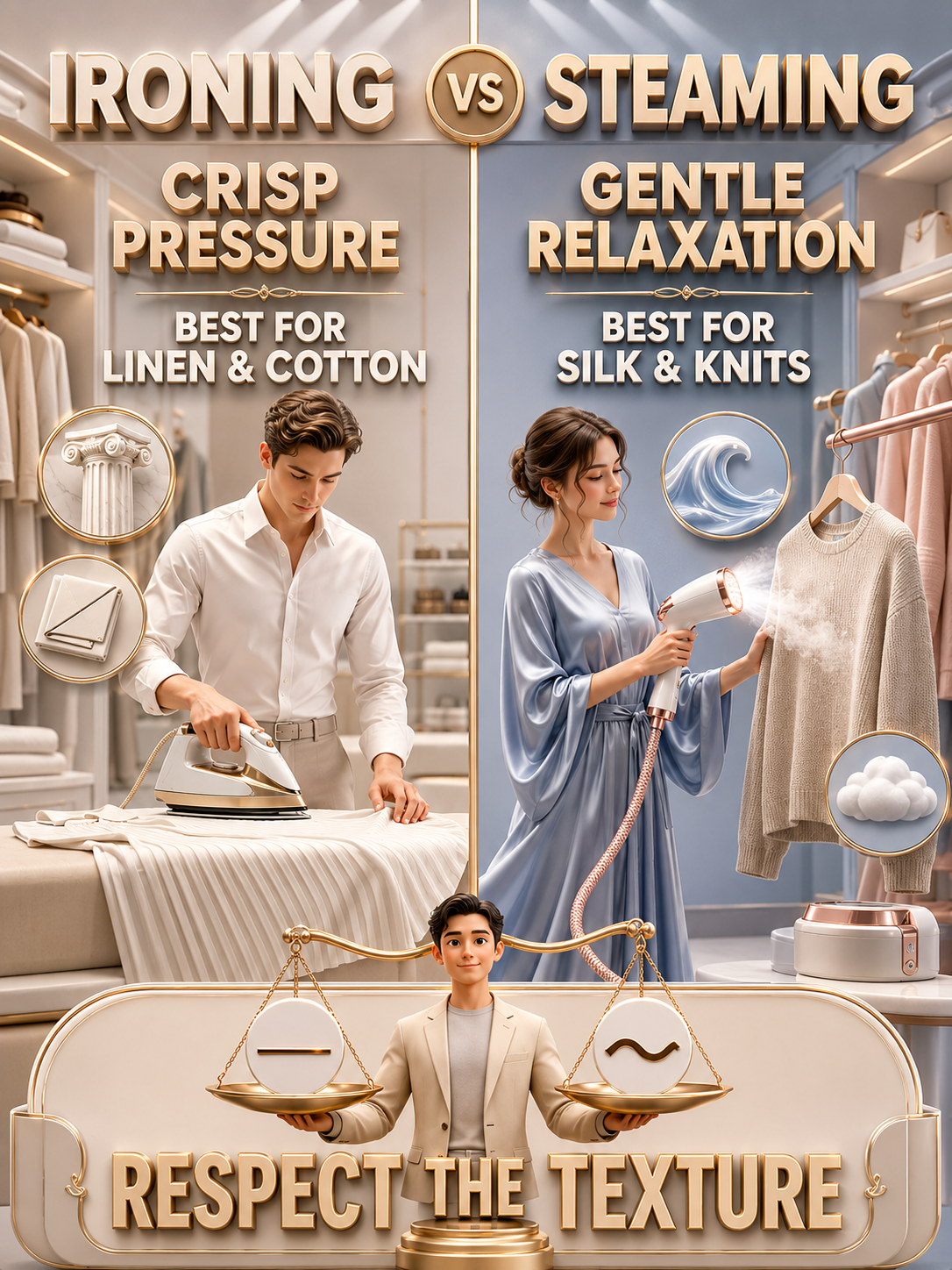
The choice between ironing and steaming depends on the fabric type and garment structure. Ironing uses direct heat and pressure, making it best for crisp, structured items like cotton shirts and linen trousers. Steaming uses relaxed heat, making it ideal for delicate fabrics like silk, wool, and synthetics, preventing scorch marks. 🌬️💨
The Ultimate Fabric Showdown: Ironing vs. Steaming What is Actually Better for Your Wardrobe? 👔✨
We have all been there. You are running ten minutes late for an important meeting, an evening gala, or a casual weekend brunch. You pull your favorite outfit out of the closet, only to find it completely covered in stubborn wrinkles. Your mood immediately sinks as you face the ultimate laundry dilemma: do you heat up the traditional iron or pull out the modern garment steamer? 💨⏳
Taking proper care of your wardrobe isn’t just about washing and folding. The way you remove wrinkles directly affects how long your garments last, how they drape on your body, and whether they maintain their rich colors over time. But with conflicting advice everywhere, it is easy to accidentally ruin a premium silk blouse or flatten a perfectly tailored blazer. Let’s dive deep into the classic debate of ironing vs. steaming to see which method deserves a permanent spot in your daily styling routine. 🥊👗
1. Demystifying the Traditional Iron: The Power of Direct Heat and Crisp Precision ⚡🧱
The household iron has been a staple of garment maintenance for generations. It relies on a simple yet effective combination: direct thermal heat, heavy physical pressure, and localized moisture.
When you press a hot metal soleplate onto a wrinkled fabric, you are physically flattening the molecular bonds of the textiles. This method forces the individual fibers to lie perfectly flat, straight, and rigid until the fabric completely cools down. 🌡️👔
When Direct Pressure is Non-Negotiable 💼
There are certain styling aesthetics that absolutely require the crisp, sharp discipline that only a traditional iron can provide:
- The Structured Dress Shirt: If you want sharp creases along your sleeves and a perfectly rigid collar that sits up elegantly under a blazer, you need an iron. 🤵
- Pleated Skirts and Linen Trousers: Ironing allows you to lock sharp angles, military creases, and complex pleats back into place after a washing cycle.
- Heavy Cotton and Pure Linen Fabrics: These dense, stubborn textiles often resist gentle steam and require the literal weight of an iron to relax.
2. The Rise of the Garment Steamer: Effortless Relaxation for Delicate Textiles 🌬️☁️
Garment steamers represent a completely different philosophy of textile maintenance. Instead of flattening fibers down through crushing force, a steamer sprays hot water vapor directly into the fabric weaves.
This continuous stream of moisture swells the dry, tight fibers, causing them to relax, expand, and naturally untangle under their own weight. Because the steamer head rarely has to make high-pressure contact with the material, it eliminates the structural friction that damages delicate patterns. 🕊️✨
The Savior of Luxury and Delicate Materials 🧵
If your personal style incorporates romantic volume, flowy silhouettes, or luxury textiles, a garment steamer is your best friend:
- Silks, Satins, and Chiffons: These materials can melt, scorch, or develop a weird artificial sheen if touched by a hot flat iron. Steam safely relaxes them without contact. 🐚
- Knitwear and Cashmere Sweaters: Steaming actually plumps up flattened knit fibers, restoring the original soft bounce, loft, and warmth of your favorite winter knits.
- Complex Silhouettes: Garments with ruffles, cascading tiers, asymmetrical drapes, or intricate beadwork are nearly impossible to iron flat, but steam handles them effortlessly on a hanger. 💃
3. Side-by-Side Analysis: Comparing Time, Efficiency, and Wardrobe Longevity 📊⏱️
To help you choose the right tool for your specific lifestyle, let’s look at a straightforward feature comparison of these two essential garment care methods:
| Feature Criteria | Traditional Ironing | Modern Garment Steaming |
| Primary Mechanism | Heavy pressure combined with direct contact heat | Relaxed moisture vapor with minimal fabric contact |
| Best Fabric Match | Sturdy cotton, heavy linen, structured denim | Delicate silk, soft wool, synthetics, blended knits |
| Visual Finish Style | Sharp, rigid, crisp, with distinct folded creases | Soft, natural, flowing, fluid drape appearance |
| Risk of Garment Damage | High risk of scorching, burning, or leaving shiny marks | Very low risk of fiber damage or burning |
| Setup & Speed Profile | Requires a bulky board; slower process per piece | Quick setup; rapid wrinkle removal on a hanger |
4. The Hidden Benefits of Steaming: Deep Sanitization and Odor Elimination 🦠🍃
Many people view a garment steamer purely as a wrinkle remover, but its secondary function is arguably its biggest superpower: hygienic sanitization.
The steam emerging from a high-quality unit is hot enough to kill the vast majority of surface bacteria, dust mites, and fabric allergens without relying on harsh chemical sprays.
- Refreshing Between Cleans: If you wore a structured wool coat or a luxury blazer out to a dinner venue, you don’t need to rush it to the dry cleaner. A quick steam pass will vaporize embedded food, smoke, or environmental odors instantly. 🧥💨
- Extending Fabric Lifespans: Frequent dry cleaning uses harsh chemical solvents that break down delicate textile fibers over time. Steaming acts as an interim refresh, cutting your dry cleaning bills in half. 💸🌳
5. The Dark Side of Ironing: Shiny Marks, Crushed Fibers, and Scorch Traps 🛑⚠️
While ironing delivers unparalleled sharpness, it comes with a steep learning curve. If the temperature dial is set even a few degrees too high for synthetics or dark wool blends, you run the risk of irreversible fabric damage.
The Dreaded ‘Iron Shine’ 🌟❌
Have you ever noticed an unsightly, glossy shine on the seams or pockets of dark trousers? That happens when the heavy heat and weight of an iron permanently crush the delicate raised fibers of the textile, creating a completely flat, reflective surface. Once fibers are crushed to this point, it is incredibly difficult to restore their original texture.
Accidental Scorch Marks 🔥
A single second of distraction while your iron is resting face-down can burn an indelible yellow or brown stain right onto the center of your favorite garment. Steamers are inherently safer because they don’t rely on trapped heat, making it nearly impossible to accidentally burn holes in your outfits.
6. Strategic Rules: How to Combine Both Methods for a Pristine Wardrobe 🧭👗
You do not have to pick a single side in the ironing vs. steaming debate. In fact, elite fashion curators and wardrobers use both tools strategically depending on the garment’s design structure.
The ‘Wrong Tool Rule’ of Fabric Care 🛠️
Using the wrong tool can ruin the intended energy of an outfit. For example, if you iron a flowing, romantic bohemian maxi-dress flat with crisp creases, you strip away its effortless fluid movement. Conversely, if you steam a structured corporate power suit without setting the creases, it can look sloppy rather than sharp. Match the tool to the intended look:
- The Structure Rule: If the garment relies on crisp architectural lines to look good (pleats, collars, cuffs), reach for the iron. 🏛️
- The Fluidity Rule: If the garment relies on natural movement, bounce, or delicate textures to look good (dresses, knits, silks), reach for the steamer. 🌊
Respect the Texture to Elevate Your Style 🌈✨
At the end of the day, your wardrobe is an investment in your personal identity and self-confidence. Treating your clothes with the right wrinkle-removal method isn’t just about utility; it’s an act of respect for the craftsmanship of your garments. By understanding when to deploy the sharp discipline of an iron and when to embrace the gentle relaxation of a steamer, you ensure your clothing always fits beautifully, drapes perfectly, and lasts for years to more come.
Ironing is the master of structure, definition, and crisp lines, while steaming is the ultimate champion of fabric health, speed, and delicate luxury.
Want to discover the absolute best wardrobe preservation secrets and top-rated styling tools to keep your clothes looking fresh off the runway? Explore our premium style guides and fabric care reviews at trendymuse.top today! Let’s elevate your personal style together! 🚀👚