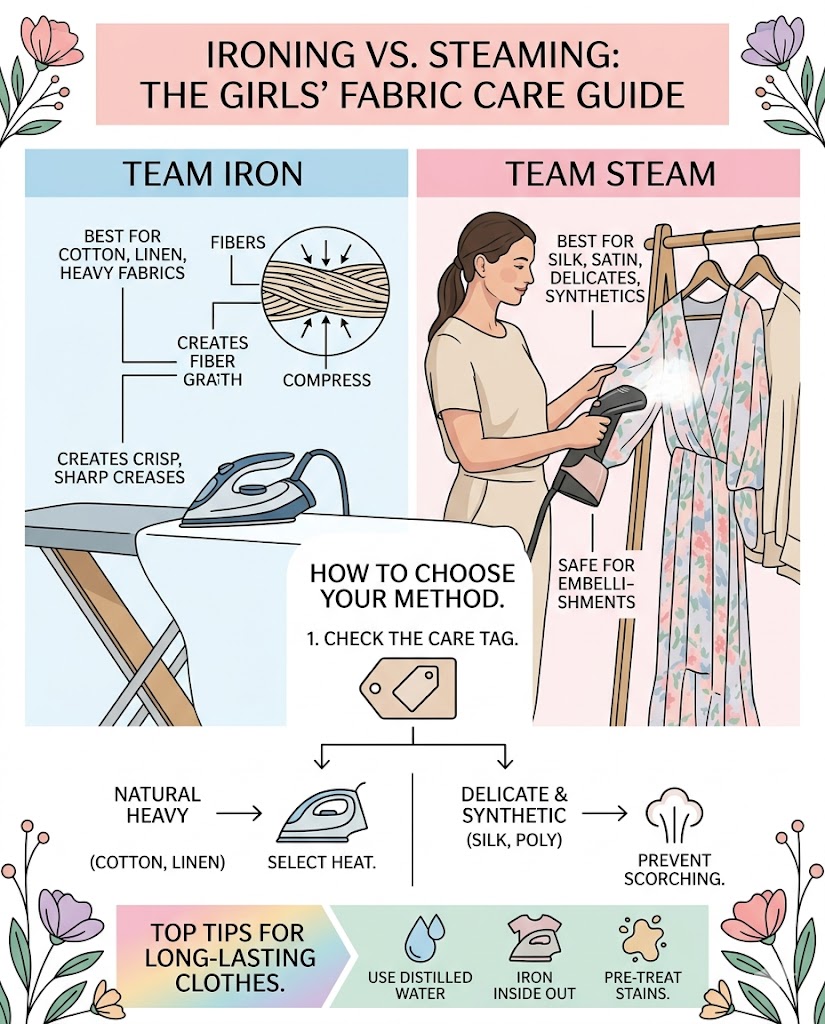
Maintaining a pristine wardrobe requires more than just high-quality fashion; it demands an understanding of proper garment care. This comprehensive guide explores the critical debate between ironing and steaming, providing objective insights into which method best suits specific fabric types and garment constructions. While traditional ironing offers precision for structured pieces like cotton button-downs and pleated skirts, steaming provides a gentle, heat-dispersing alternative for delicate silks, synthetics, and intricate embellishments. By analyzing heat application, pressure, and fiber integrity, this article serves as a definitive resource for optimizing garment longevity. Readers will discover the technical advantages of both tools, ensuring every outfit remains wrinkle-free and professionally maintained. Whether managing a professional capsule collection or high-end evening wear, understanding these textile maintenance techniques is essential for anyone looking to preserve the aesthetic and structural quality of their clothing for years to come.
The Science of Smooth Fabrics
The quest for a wrinkle-free appearance is a fundamental aspect of garment maintenance. In the world of fashion, the two primary contenders for achieving this are the traditional flat iron and the modern garment steamer. While both utilize heat to relax the molecular bonds in fabric fibers, they apply that heat in fundamentally different ways. Understanding these differences is key to effective garment care and ensuring that textiles remain in peak condition.
Understanding the Traditional Iron
Ironing is a process that involves the application of heat and physical pressure via a heated metal plate (the soleplate). This method is highly effective for textiles that require a crisp, sharp finish.
How It Works
The iron’s heated surface comes into direct contact with the fabric. When combined with the weight of the iron and the moisture from a steam function, it flattens the fibers. This is particularly effective for heavy-duty natural fibers such as linen and cotton.
Advantages of Ironing
- Precision and Creasing: Ironing is the only way to achieve sharp creases in trousers or crisp collars on blouses.
- High Heat Capacity: Irons can reach higher temperatures, which is necessary for stubborn wrinkles in thick materials.
- Longevity of the Press: A pressed garment often stays wrinkle-free longer than a steamed one because the fibers are compressed.
The Rise of the Garment Steamer
Steaming has become increasingly popular in the fashion industry, especially for quick touch-ups and delicate materials. Unlike an iron, a steamer does not touch the fabric; instead, it uses a continuous flow of hot steam to relax the fibers while the garment hangs.
The Gentle Approach
Because there is no direct contact or pressure, steaming is significantly less abrasive than ironing. It relies on the weight of the garment itself to pull wrinkles out as the steam penetrates the weave.
Advantages of Steaming
- Safety for Delicates: Steaming is the preferred method for silk, chiffon, and lace, where direct heat could scorch or melt the fibers.
- Versatility with Embellishments: For garments with sequins, beads, or embroidery, a steamer allows for wrinkle removal without damaging the surface details.
- Efficiency: Steaming is generally faster for items with complex silhouettes, such as tiered dresses or ruffled tops.
Fabric Compatibility: A Breakdown
Choosing the right tool often depends on the material composition of the clothing.
| Fabric Type | Recommended Method | Reason |
| Cotton & Linen | Ironing | Requires high heat and pressure to remove deep creases. |
| Silk & Chiffon | Steaming | Sensitive to direct heat; steam is gentle and prevents scorching. |
| Wool & Cashmere | Steaming | Ironing can “crush” the natural loft of the fibers; steam refreshes them. |
| Synthetic Blends | Steaming | High risk of melting with an iron; steam is safer. |
| Denim | Ironing | Thick fibers require the weight of an iron for a smooth finish. |
Preserving Garment Longevity
Proper fabric maintenance is a cornerstone of sustainable fashion. Frequent ironing on high heat can eventually wear down fibers, causing them to thin or develop a “shine” (especially on dark fabrics). Conversely, improper steaming can lead to water spots or dampness if the device is not used correctly.
Pro-Tips for Professional Results
- Check the Care Label: Always refer to the international textile care symbols located on the garment’s interior tag.
- Distilled Water: To prevent mineral buildup in both irons and steamers, use distilled water to extend the life of the appliance.
- Inside Out: When ironing dark or delicate fabrics, iron them inside out to avoid surface damage.
The Verdict: Ironing or Steaming?
The decision is not necessarily about which tool is better, but which tool is appropriate for the specific task. A well-rounded wardrobe maintenance kit should ideally include both. Use the iron for structured pieces—blazers, button-downs, and pleated skirts. Reserve the steamer for everyday knits, evening gowns, and refreshing items between washes.
By mastering both techniques, one can ensure that their wardrobe always reflects a high standard of care, preserving the integrity of the fashion pieces and ensuring they look brand new for every occasion.