The No-Buy Challenge is a transformative movement within the fashion industry, encouraging individuals to pause new acquisitions and rediscover the latent potential of their existing wardrobes. This strategic guide explores the mechanics of a successful fashion fast, moving beyond mere restriction to foster deep-seated stylistic creativity and financial discipline. By implementing structured “shopping bans,” participants can break the cycle of fast-fashion consumption, reduce their environmental footprint, and develop a more intentional relationship with personal style. The article delves into practical techniques such as wardrobe “shopping,” garment care, and the psychological benefits of mindfulness in fashion. Designed for the modern woman looking to optimize her lifestyle, this comprehensive analysis provides the roadmap for transitioning from a consumer-driven mindset to one of curated excellence, ensuring that every piece owned is valued, maintained, and worn with absolute confidence and purpose.
Understanding the No-Buy Challenge
In an era defined by rapid micro-trends and the accessibility of e-commerce, the No-Buy Challenge has emerged as a vital counter-movement. At its core, this challenge is a self-imposed period where an individual commits to purchasing no new clothing, accessories, or footwear. The objective is not merely to save money, but to reset the consumer’s psychological triggers and foster a deeper appreciation for the items already in one’s possession. By removing the option to buy, the focus shifts toward wardrobe optimization and creative styling.
The Strategic Importance of Conscious Consumption
The modern fashion landscape is often characterized by “disposable” trends. Engaging in a No-Buy Challenge serves as an entry point into sustainable fashion practices. When the influx of new items stops, the lifecycle of existing garments becomes the priority. This shift is essential for building a capsule wardrobe that prioritizes quality over quantity. Understanding the value of textile longevity and garment construction allows for a more sophisticated approach to personal branding and style.
Setting the Parameters: Rules for Success
A successful challenge requires clearly defined boundaries. While the “hard” version of the challenge forbids all non-essential purchases, many adapt the rules to fit their specific lifestyle needs.
- Duration: Challenges typically last for 30 days, three months, or even a full year. Beginners often find the 30-day “Fashion Detox” most manageable.
- Essential Replacements: Rules should be established regarding “necessary” items. For example, if a primary pair of work trousers is damaged beyond repair, a replacement may be permitted.
- The “One-In, One-Out” Philosophy: For those transitioning out of a challenge, this rule ensures that for every new item added, one must be donated or sold, maintaining a balanced inventory.
Maximizing Your Current Inventory: “Shopping Your Closet”
The most effective way to “fall back in love” with a wardrobe is through the process of internal discovery. Most individuals only wear 20% of their wardrobe 80% of the time. The No-Buy Challenge forces an exploration of the remaining 80%.
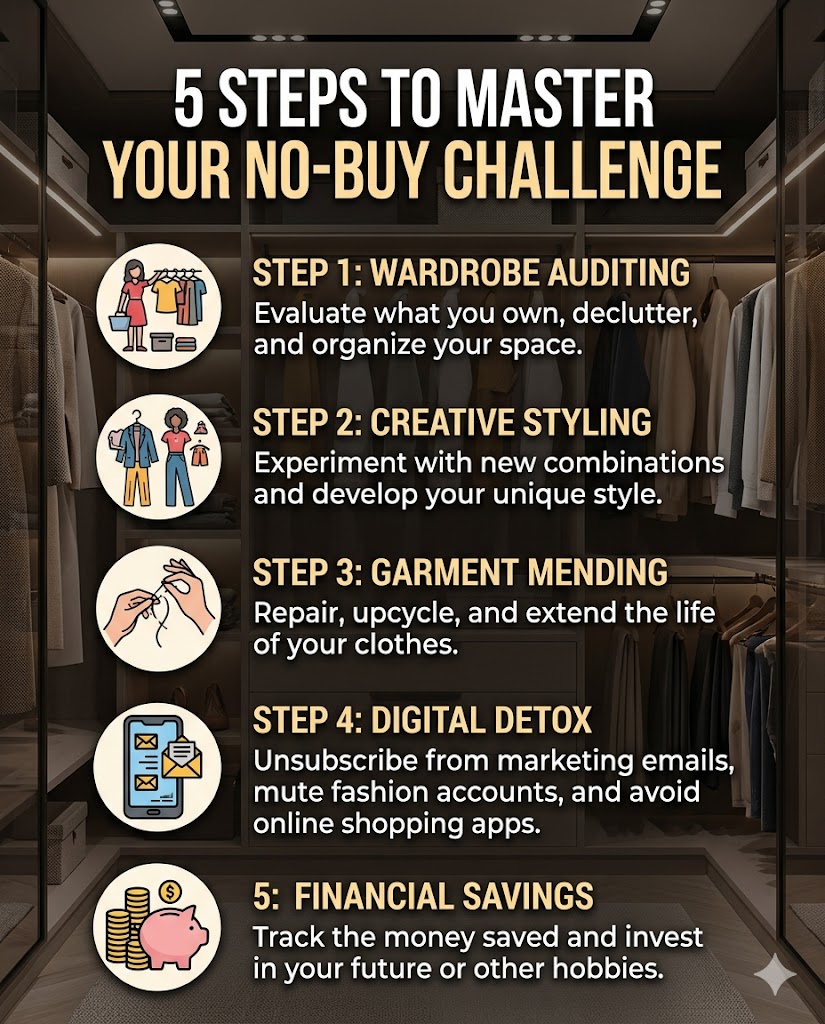
- The Deep Clean and Audit: Remove every item from the closet. Categorize garments by type and season. This visual representation of volume often highlights redundancies (e.g., owning six near-identical white t-shirts).
- Outfit Formulas and Documentation: Spend time pairing items that have never been worn together. Use the “three-way rule”: every item in the closet should be able to be styled in at least three different ways. Taking photos of these combinations creates a personal lookbook for future reference.
- The Hanger Trick: Turn all hangers in one direction. After wearing an item, flip the hanger. At the end of the month, it becomes clear which items are truly essential and which are merely taking up space.
The Psychological Shift: Breaking the Reward Loop
Retail therapy is a documented phenomenon where shopping triggers dopamine release. The No-Buy Challenge interrupts this loop. Participants often report an initial “withdrawal” phase followed by a significant increase in mental clarity. Without the constant search for the “next best thing,” there is more room for creative expression. Style becomes about innovation, not just acquisition.
Sustainable Garment Care and Maintenance
When you stop buying new, you naturally become more invested in the preservation of the old. High-end fashion maintenance is a critical component of the No-Buy lifestyle.
- Mending and Tailoring: A simple hem adjustment or replacing plastic buttons with high-quality alternatives can completely transform a garment’s silhouette and perceived value.
- Advanced Fabric Care: Learning the specific needs of silk, wool, and linen ensures these pieces last for decades rather than seasons. Investing in a high-quality steamer and proper storage solutions is a hallmark of the conscious fashionista.
The Role of Digital Mindfulness
To succeed in a No-Buy Challenge, one must curate their digital environment. Unsubscribing from promotional emails and muting “haul” content on social media reduces the temptation of targeted advertising. Replacing these inputs with content focused on styling tips, sustainable living, and closet organization reinforces the goals of the challenge.
Financial and Environmental Impact
The benefits of a shopping hiatus extend beyond the closet.
- Wealth Building: The capital redirected from impulsive fashion purchases can be funneled into high-yield savings or quality-of-life investments.
- Carbon Footprint Reduction: By reducing demand for new textiles, participants actively contribute to the reduction of water waste and chemical runoff associated with global garment production.
Transitioning: Life After the Challenge
The goal of a No-Buy period is rarely to never shop again. Instead, it is to build a foundation for intentional purchasing. Post-challenge, the consumer is better equipped to identify “gap” items—pieces that are truly missing from their wardrobe and will add long-term value—rather than falling prey to fleeting trends.
The No-Buy Challenge is a sophisticated exercise in self-discipline and stylistic refinement. It empowers individuals to take control of their environment, celebrate their unique aesthetic, and contribute to a more sustainable future. By focusing on what is already owned, the “new” is found in creativity, not in a shopping bag.