Mastering the art of layering is the cornerstone of a versatile and functional wardrobe. This comprehensive guide explores the strategic techniques required to navigate temperature fluctuations while maintaining a high-fashion aesthetic. From the “Cozy Edit” of the colder months—utilizing the “Coat Equation” and texture mixing—to “Sun-Drenched Style” featuring breathable mesh and linen overlays, this article provides an objective roadmap for year-round dressing. Readers will discover the “Scarf Secret” for winter elevation and the utility of the summer vest for high-heat environments. Furthermore, the guide details the “Closet Crossover,” demonstrating how to transition summer staples like dresses into autumnal mainstays. By focusing on capsule layering and the “Cardigan Comeback,” this article serves as a professional resource for optimizing a wardrobe across all four seasons, ensuring clarity in construction and sophistication in execution.
Introduction to Strategic Layering
Layering is more than a practical response to the weather; it is a sophisticated styling methodology that adds depth, dimension, and versatility to any ensemble. Whether the goal is to retain heat during a sub-zero winter or to manage a midday heatwave in July, understanding the physics of fabrics and the aesthetics of proportions is essential. This guide outlines the professional standards for layering across the seasonal spectrum.
Fall & Winter: The Cozy Edit
Cold-weather dressing requires a delicate balance between thermal efficiency and visual sleekness. The objective is to achieve maximum warmth without excessive bulk.
Mastering the Layer: Chic Ways to Stay Warm
The foundation of winter layering begins with the base layer. High-quality thermal fabrics, such as superfine merino wool or technical heat-retention blends, provide a streamlined silhouette. The mid-layer serves as the primary insulator; think cashmere turtlenecks or structured flannel shirts. By graduating the thickness of garments from thin to thick, the body remains insulated while allowing for effortless movement.
The Coat Equation: Styling Layers Under Outerwear
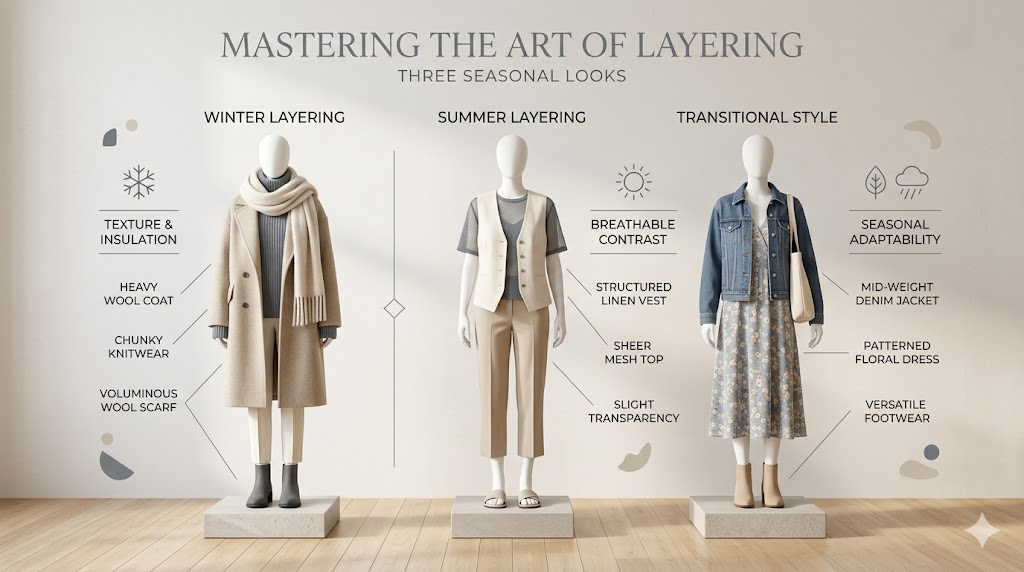
The “Coat Equation” refers to the relationship between the weight of the knitwear and the structure of the overcoat. When wearing chunky cable-knit sweaters, an oversized, drop-shoulder wool coat is necessary to prevent restriction. Conversely, a tailored trench or wrap coat pairs best with thinner, refined layers. The goal is to ensure the outermost layer drapes cleanly over the interior components.
Texture Play: Mixing Knits, Leathers, and Silks
Visual interest in a monochrome winter outfit is achieved through texture play. Combining a heavy wool knit with a sleek leather skirt or a delicate silk slip dress creates a high-contrast aesthetic. This interplay of light-reflecting and light-absorbing fabrics prevents the ensemble from appearing flat.
The Scarf Secret: Elevating Your Cold-Weather Fit
Scarves are often the final architectural element of a winter look. Beyond their functional heat retention, the “Scarf Secret” lies in the drape. A large blanket scarf can be belted over a coat to create a makeshift poncho, while a slim silk scarf tucked into a collar adds a touch of classic sophistication.
Summer Style: Breezy & Light
Summer layering focuses on sun protection, moisture management, and transitioning between outdoor heat and air-conditioned interiors.
The Mesh Move: Lightweight Layers for Hot Days
Mesh and sheer fabrics are the definitive “cool” layers for peak summer. A mesh top worn over a simple camisole provides visual complexity without trapping heat. This technique is particularly effective for “Beach to Brunch” transitions, where an oversized mesh overlay can serve as a sophisticated cover-up.
Cool & Coordinated: Styling Linen and Lace
Linen remains the gold standard for summer textiles due to its breathability. Layering a linen blazer over a lace bralette or camisole offers a structured yet airy silhouette. Lace adds a delicate, feminine texture that complements the raw, organic feel of linen, creating a balanced, high-end look.
The Summer Vest: Your New Favorite Layer
The waistcoat or summer vest has emerged as a critical staple. Worn as a standalone top or layered over a crisp cotton tee, it provides a tailored finish to relaxed shorts or trousers. In lightweight fabrics like cotton or linen, the vest adds a “finished” feel to an outfit without the weight of a traditional jacket.
The Year-Round Wardrobe: Transitioning with Ease
The most efficient wardrobes are those that utilize “Closet Crossover” techniques to bridge the gap between seasons.
Transitioning Summer Dresses for Fall
A summer midi dress can be easily adapted for autumn by layering a fitted turtleneck underneath or a heavy leather jacket over the top. Swapping sandals for knee-high boots completes the transition, allowing light fabrics to work in cooler climates.
The Denim Jacket Diary: A Layer for Every Season
The denim jacket is perhaps the most versatile layering tool in existence. In summer, it is slung over the shoulders for evening breezes; in winter, it acts as a rugged mid-layer beneath a heavy parka. Its structural integrity makes it ideal for grounding softer fabrics like chiffon or silk.
Capsule Layers: 5 Pieces, 50 Outfits
Building a capsule of essential layers maximizes outfit combinations. The core five usually include:
- A neutral trench coat.
- An oversized blazer.
- A high-quality cardigan.
- A denim jacket.
- A lightweight turtleneck. By mixing these five pieces with seasonal basics, one can navigate temperature swings from day to night with professional ease.
The Cardigan Comeback: Styling the Ultimate Staple
The cardigan has seen a resurgence as a structural garment. No longer relegated to “loungewear,” the modern cardigan is often cropped and buttoned as a top or oversized and worn as a lightweight coat. It serves as the ultimate “swing” piece for offices and commuting