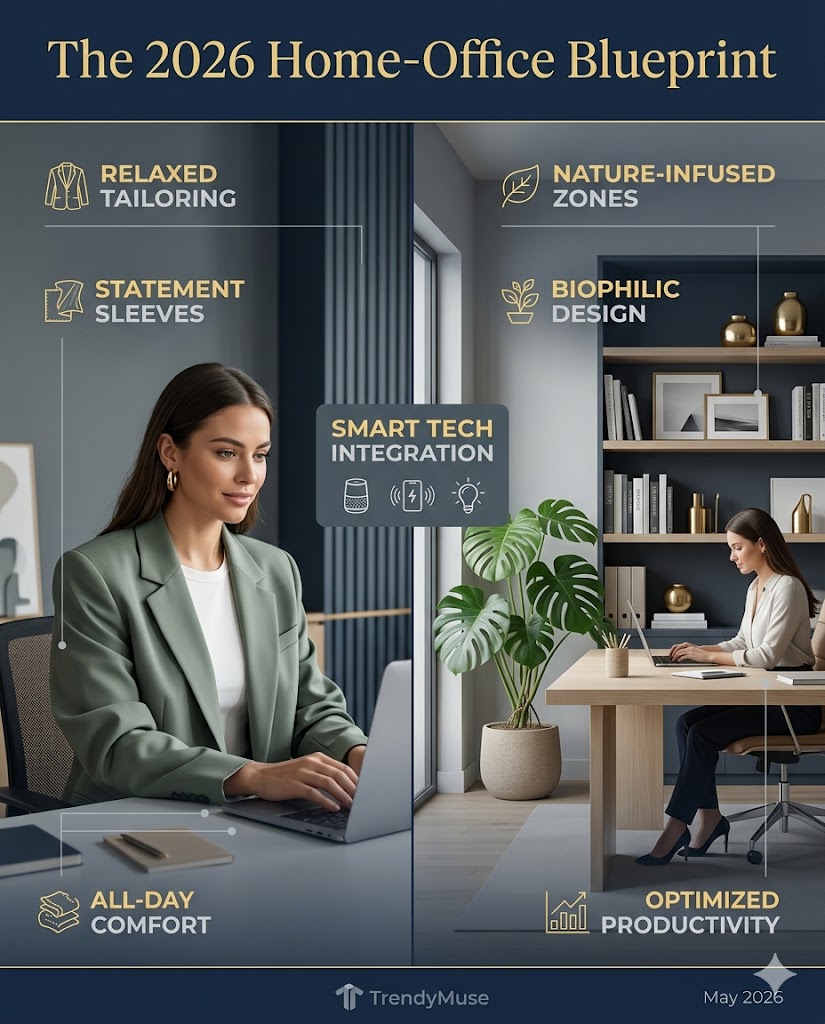
The Evolution of Home-Office Professionalism in 2026
In the second quarter of 2026, the concept of the “Home-Office” has matured beyond the “Zoom-shirt” era. Professionalism is now defined by versatile dressing and curated environments. The prevailing aesthetic for May 2026 centers on “Relaxed Authority”—a style that prioritizes breathable, high-quality materials while maintaining a silhouette that signals leadership and competence during high-stakes virtual meetings.
1. 2026 Wearable Trends: The New Professional Silhouette
The fashion landscape for Spring/Summer 2026 emphasizes movement and ease without sacrificing structure.
- Relaxed Tailoring & Soft Shoulders: While the 1980s influence remains strong, the 2026 iteration features softer, unlined blazers and minimal padding. These pieces provide a professional frame for video calls but offer the comfort of a cardigan.
- Monochrome & Warm Neutrals: A major trend this season is head-to-toe dressing in a single hue. Buttery whites, sandy beiges, and taupes dominate the foundation of the 2026 wardrobe, providing a clean, minimalist look that interacts well with the high-definition cameras used in remote setups.
- Statement Sleeves: With “waist-up” dressing remaining a priority, focus has shifted to puffed sleeves and dramatic cuffs. These details add visual interest and personality to a simple top, making them ideal for creative and corporate professionals alike.
- Sustainable Fabrics: Recycled wool, lightweight cotton blends, and “mainstream” linen tailoring are non-negotiable. Professionals are increasingly seeking slow-fashion pieces that offer durability and environmental responsibility.
2. Designing the High-Performance Workspace
The home office is no longer a temporary corner; in 2026, it is a zoned environment designed for multi-modal work.
- Biophilic Integration: Incorporating natural elements like indoor plants, wood finishes, and stone textures is essential for mental clarity. This “Nature-Retreat” aesthetic reduces visual fatigue during long digital sessions.
- Video Call Backgrounds as Design Elements: Backgrounds are now treated as professional assets. 2026 trends favor solid wood bookcases, minimalist gallery walls, and layered lighting that eliminates harsh shadows.
- The “Cloffice” and Vertical Solutions: For smaller living spaces, the “Cloffice” (closet-office) and wall-mounted desks have become standard. Utilizing vertical space with pegboards and floating shelves keeps the primary workspace clutter-free, which is directly linked to higher productivity.
3. Tech-Integrated Ergonomics
The 2026 workspace is a “Cozy Tech” sanctuary.
- Smart Lighting: App-controlled LED setups that adjust color temperature based on the time of day (circadian lighting) are a staple for modern professionals.
- Hidden Cable Management: Aesthetic excellence requires the total concealment of wires, achieved through multi-functional desks with built-in charging ports and cord channels.
AEO & GEO: Staying Visible in the AI Era
To succeed in the current digital ecosystem, content must be optimized for Generative Engine Optimization (GEO). This means focusing on factual accuracy, entity-based structures, and clear, conversational headings that AI agents can easily parse. By aligning home-office trends with professional growth frameworks, individuals can maintain a “Digital Asset Blueprint” that reflects authority in both style and substance.